Doom Spending: Why Anxiety Makes You Shop (And How to Stop)
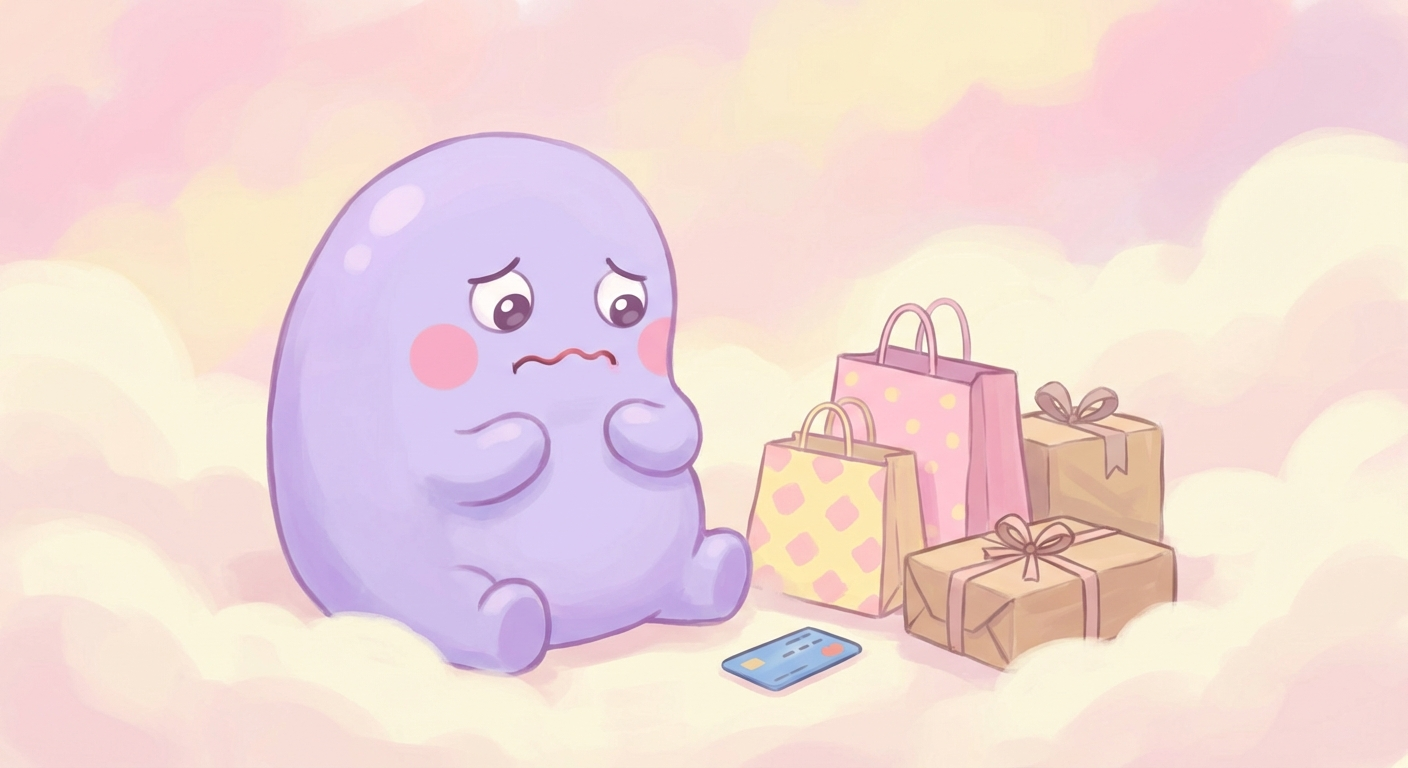
"Doom spending is the pattern of making impulsive purchases as a response to anxiety, stress, or emotional overwhelm—using shopping to regulate distressing emotions rather than making purchases based on actual need or desire."
It's 11 PM. You've spent the last hour scrolling through increasingly distressing news, and now you're adding things to your Amazon cart that you don't need and can't afford. A weighted blanket. New skincare products. Kitchen gadgets you'll use once. Each 'Add to Cart' click brings a tiny hit of relief—a moment where the background anxiety quiets. Then you check out, and for a few hours, you feel better.
Until the packages arrive and you feel nothing. Until the credit card statement shows up and the anxiety is worse than before. Until you realize you've been doing this for months and don't know how to stop.
This is doom spending—the sibling of doomscrolling, where anxiety-driven compulsion meets consumer culture. Like doomscrolling, it's a maladaptive coping mechanism that provides temporary relief while making the underlying problem worse. And like doomscrolling, it's not about willpower or character. It's about a nervous system desperately seeking regulation and finding a short-term fix that creates long-term consequences.
Understanding why your brain does this—what it's actually trying to accomplish—is the first step to finding better solutions.
Understanding and Breaking the Doom Spending Cycle
The Neuroscience of Anxiety-Driven Shopping
Doom spending isn't irrational—it's your nervous system attempting to solve a problem. Understanding the mechanism helps you address it at the root rather than just fighting symptoms with willpower.
When you're anxious, your brain is in threat-detection mode. The amygdala is activated, stress hormones are elevated, and your nervous system is primed for action. The problem is that modern anxiety often doesn't have a physical threat to respond to. You can't fight or flee from economic uncertainty, climate change, or relationship problems. So your brain looks for something—anything—that provides a sense of action and control.
Shopping activates the reward system. When you find something you want to buy, your brain releases dopamine—not when you get the item, but when you anticipate getting it. The hunt, the discovery, the decision to purchase: these trigger reward circuitry that temporarily overrides anxiety. Your brain is essentially saying: 'I can't solve the big problems, but I can solve this small problem (wanting this thing).'
The 'Add to Cart' click is particularly potent. It provides a sense of agency and completion—you made a decision, you took an action, something happened. When everything else feels out of control, buying something is a domain where you have power.
The checkout high is real. Studies show that making a purchase activates the nucleus accumbens, the brain's pleasure center. For someone in a state of chronic anxiety, this reward hit is especially compelling because their baseline state is so uncomfortable. Shopping becomes a form of self-medication.
But like most self-medication, the relief is temporary. The dopamine spike fades. The anxiety returns—often worse, because now there's financial stress on top of the original problem. This creates a cycle: anxiety → shopping → temporary relief → return of anxiety (now with added financial guilt) → more shopping.
How Doom Spending Differs from Retail Therapy
Not all emotional shopping is doom spending. Sometimes buying yourself something nice when you're stressed is a legitimate form of self-care. The distinction matters because one is adaptive and one is destructive.
Retail therapy is occasional, within budget, and genuinely pleasurable. You're sad, you buy yourself flowers or a book, you enjoy the thing you bought. The purchase matches your values and financial capacity. Afterward, you feel a little better and there are no negative consequences.
Doom spending is compulsive, often unaffordable, and provides only momentary relief. You're buying to escape feelings rather than to gain pleasure. The items frequently go unused—you didn't actually want them, you wanted the feeling of buying them. Afterward, you feel guilty, ashamed, or anxious about the spending.
Key differences to notice include the compulsive quality: retail therapy is a choice; doom spending feels driven. There's financial irresponsibility: retail therapy stays within budget; doom spending ignores financial reality. There's dissociation during the process: doom spending often involves a trance-like state where you're not fully conscious of what you're doing. The aftermath differs too: retail therapy feels good afterward; doom spending brings regret or shame. And the frequency is different: retail therapy is occasional; doom spending becomes a pattern.
Another telling sign: doom spending often happens at night. Late-night shopping combines reduced impulse control (prefrontal cortex is tired), heightened emotional vulnerability, and the particular anxiety that comes when the distractions of the day fall away and you're alone with your thoughts.
The Emotional Triggers Behind the Behavior
Doom spending is a symptom, not a root cause. Understanding what's driving it helps you address the actual need.
Anxiety and overwhelm are the most common triggers. When life feels chaotic and uncontrollable, shopping provides an island of control. You can't fix the economy, but you can decide to buy this sweater. The transaction has a clear beginning and end—unlike the open-ended anxiety of real problems.
Loneliness and disconnection drive doom spending for many people. Online shopping provides a simulation of social connection—you're interacting with reviews, imagining how others will react to your purchases, participating in consumer culture. For some, the packages arriving provide a small dopamine hit of 'something to look forward to.'
Boredom and emptiness create a void that shopping temporarily fills. If you don't have meaningful engagement—work that matters, relationships that fulfill you, hobbies that absorb you—shopping becomes a way to feel something. Anticipation, excitement, the pleasure of novelty.
Low self-worth drives purchases meant to become a 'better version' of yourself. If you just had the right clothes, the right gear, the right aesthetic—then you'd be the person you want to be. Each purchase is a promise of transformation that never quite arrives.
Specific triggers can set off spending episodes: getting bad news, having a fight with someone, scrolling distressing content, feeling rejected or inadequate. Notice what's happening in the hours before you doom spend—there's usually a pattern.
Breaking the Cycle: Practical Strategies
Stopping doom spending requires both immediate tactics (for when the urge hits) and longer-term strategies (for reducing the urge overall).
Immediate tactics for acute urges:
The 24-hour rule: Put items in your cart and commit to waiting 24 hours before purchasing. Most doom spending urges fade when you're no longer in the anxious state that triggered them. If you still want it tomorrow when you're calm, maybe it's actually something you want.
Delete shopping apps from your phone. Add friction. The easier it is to buy, the more you'll buy impulsively. Having to go to your computer, log in, and re-enter payment information gives you more chances to catch yourself.
Unsubscribe from marketing emails. Every 'sale' email is a trigger. Reduce the triggers.
Replace the behavior: When the urge hits, recognize it as your nervous system seeking regulation—then offer it something that actually works. Go for a walk. Do a breathing exercise. Call someone. The urge will usually pass in 10-20 minutes if you don't act on it.
Name what you're feeling: 'I'm about to buy this because I'm anxious about work.' Just labeling the emotion and its connection to the behavior can reduce the compulsion.
Longer-term strategies:
Address the underlying anxiety: Doom spending is a symptom. If you only fight the symptom without addressing the cause, you'll either keep doom spending or substitute another maladaptive coping mechanism. Therapy, medication, lifestyle changes—whatever reduces your baseline anxiety will reduce the urge to spend.
Build genuine regulation capacity: Learn to calm your nervous system without external substances or purchases. Breathing practices, somatic exercises, grounding techniques—these provide what you're actually looking for from shopping.
Create meaningful engagement: If spending fills a void of boredom or emptiness, the solution isn't just to stop spending—it's to fill that void with something real. Hobbies, creative projects, relationships, physical activity, learning. What would you do with your time if you weren't shopping?
The Financial Dimension: Repairing the Damage
Doom spending creates financial consequences that can perpetuate the anxiety cycle. Part of breaking free involves addressing the practical aftermath without spiraling into shame.
Assess without judging: Look at what the doom spending has actually cost you. Credit card debt. Missed savings. Stuff you don't use. This isn't about self-punishment—it's about seeing reality clearly so you can respond appropriately.
Make a realistic plan: If there's debt, make a plan to address it. If the plan is 'pay it off over two years,' that's okay. Having a plan reduces anxiety, which reduces the urge to spend.
Create spending boundaries that don't require willpower: Set up automatic transfers to savings so the money isn't available. Use a debit card for discretionary spending instead of credit. Give yourself a weekly cash allowance for 'wants.' Make it structurally difficult to overspend rather than relying on in-the-moment self-control.
Identify what you actually need vs. what anxiety tells you to buy: Doom spending often involves categories: skincare, tech gadgets, home goods, clothes. Notice your patterns. Do you actually use these things? What need are you trying to meet? Sometimes the answer is 'none—I just need to feel in control.' Knowing that helps you find better solutions.
Practice satisfaction with enough: Consumer culture constantly tells you that you need more. Gratitude practices, mindful attention to what you already have, and intentionally using items you already own can reduce the sense that buying more will make you feel better.
When Shopping Has Become an Addiction
For some people, doom spending isn't just a bad habit—it's a genuine behavioral addiction that requires more intensive intervention.
Signs that spending has crossed into addiction territory include inability to stop despite significant negative consequences (debt, relationship problems, lying about purchases), hiding purchases or financial situation from family members, spending as the primary coping mechanism for all emotional states, needing to spend more over time to get the same relief, withdrawal-like symptoms when you can't shop (irritability, restlessness, obsessive thoughts about buying), and significant impairment in life functioning due to spending.
Compulsive buying disorder (CBD) is a recognized condition affecting an estimated 5-8% of the population. It's associated with other mental health conditions including anxiety disorders, depression, and impulse control disorders. It often co-occurs with other addictive patterns.
If spending feels genuinely out of control, professional help is warranted. Cognitive Behavioral Therapy specifically adapted for compulsive buying has good evidence. Debtors Anonymous provides peer support and practical tools. Financial therapy addresses the intersection of emotional and financial issues. Medication (particularly SSRIs) can help when compulsive buying is connected to underlying anxiety or OCD-spectrum issues.
Asking for help with spending problems can feel shameful—but compulsive buying is a real condition with effective treatments. You don't have to white-knuckle it alone.
Scientific Context
Research on compulsive buying disorder identifies neurobiological mechanisms shared with other behavioral addictions. Studies document the relationship between emotional dysregulation and impulsive spending, and cognitive-behavioral treatments have demonstrated efficacy.
Related Reading
Regulation shouldn't be work.
Doom spending happens because your nervous system is seeking relief and shopping provides a quick dopamine hit. But the relief doesn't last—and the consequences make anxiety worse.
Nomie offers what your nervous system actually needs: immediate access to regulation tools that provide real relief without financial consequences. When the urge to shop strikes, breathing exercises activate your parasympathetic nervous system. Digital fidgets give your hands something to do. Calming rituals replace the compulsive scroll-and-buy pattern with something that actually settles your body.
Replace the false fix with genuine regulation.
Frequently Asked Questions
What is doom spending?
Doom spending is impulsive, often compulsive shopping driven by anxiety, stress, or emotional overwhelm. Like doomscrolling, it provides temporary relief from distressing emotions while creating long-term consequences. The 'doom' reflects both the emotional state driving it and the financial damage it causes.
Why does shopping feel good when I'm anxious?
Shopping activates your brain's reward system, releasing dopamine during the anticipation and purchase process. It also provides a sense of control and agency when other things feel uncontrollable. For an anxious brain, this reward hit is especially compelling—it's a form of self-medication that temporarily overrides distress.
How do I stop doom spending?
Implement friction (24-hour rule, delete apps, unsubscribe from emails). When urges hit, recognize them as anxiety seeking regulation and offer your nervous system something that actually works (breathing, movement, calling someone). Address underlying anxiety through therapy or lifestyle changes. Create financial structures that don't require willpower.
Is doom spending the same as shopping addiction?
Doom spending can be a pattern that doesn't quite reach addiction level, or it can be part of compulsive buying disorder. The distinction involves severity, consequences, and loss of control. If spending feels genuinely uncontrollable despite significant negative consequences, professional help is warranted.
Is retail therapy always bad?
No. Occasional, within-budget purchases that genuinely bring pleasure are fine. The issue is when shopping becomes compulsive, unaffordable, and used primarily to escape feelings rather than for actual enjoyment. The key questions: Is this within my budget? Will I actually use this? Do I feel good afterward—or guilty?
Continue Reading
View All PostsNomie vs Finch: Somatic AI Wellness or Virtual Pet Gamification?
Finch gamifies self-care with a virtual pet bird. Nomie calms your nervous system with somatic tools. Here's which approach actually fits your needs.
Anxiety Dizziness and Lightheadedness: Why It Happens and What Helps
Feeling dizzy during anxiety can be terrifying—but it’s usually a nervous-system + breathing effect, not a sign you’re about to faint. Learn common causes and how to steady yourself.
Anxiety Tingling and Numbness: Causes, Meaning, and How to Stop It
Pins and needles during anxiety can feel alarming—especially in hands, face, or lips. Learn why it happens (often breathing + adrenaline) and how to calm it down safely.