The Neuroscience of Doomscrolling: Why Your Brain Loves Bad News (And How to Break Free)
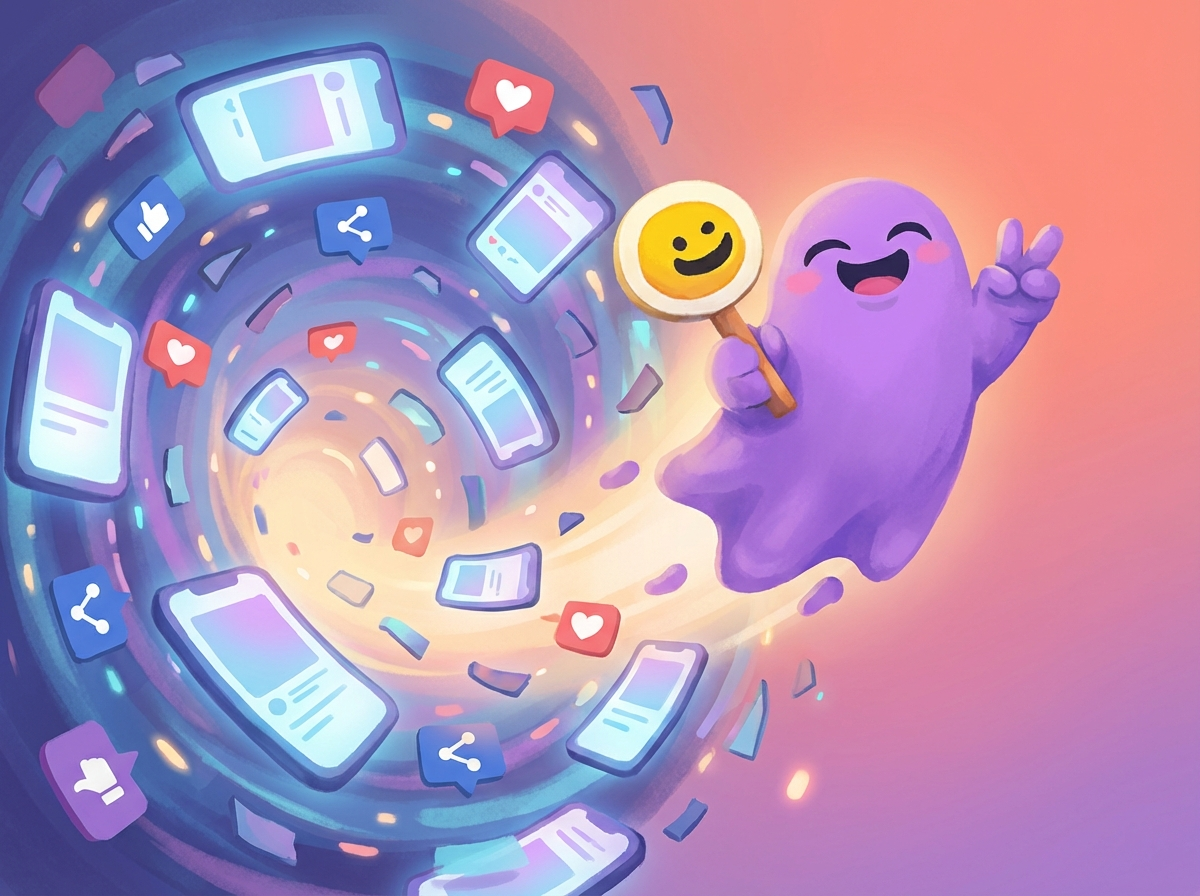
"Doomscrolling is the compulsive consumption of negative news and social media content, driven by variable reward schedules (like slot machines) and evolutionary negativity bias that treats threat-related information as survival-critical. Understanding the neuroscience reveals it's not about willpower—it's about redirecting hardwired mechanisms."
Understanding and Breaking the Doomscrolling Loop
Your Phone Is a Slot Machine (And Your Brain Is Wired to Play)
It's 11:47 PM. You told yourself you'd go to bed an hour ago. Tomorrow is a big day, and you desperately need sleep. And yet here you are, thumb moving in that familiar upward flick, eyes scanning another headline about climate disaster, political chaos, or some new threat you hadn't considered until thirty seconds ago. You feel a little worse with each scroll. You know you should stop. You cannot stop.
This isn't weakness. This isn't a character flaw. This is neuroscience. Your brain—the same brain that kept your ancestors alive on the savanna—is being expertly manipulated by systems designed by teams of behavioral scientists whose explicit job is to capture and hold your attention at any cost.
The mechanism is called a variable reward schedule, and it's one of the most powerful psychological tools ever discovered for shaping behavior. In the 1950s, psychologist B.F. Skinner discovered that rats became obsessed with levers that produced unpredictable rewards—pressing compulsively, far more than rats who received predictable rewards. The unpredictability itself was the addiction.
Social media platforms use this exact mechanism. Every time you scroll, you encounter unpredictable content—sometimes interesting, sometimes boring, sometimes enraging, sometimes delightful. You never know what's coming next. This isn't accidental; it's the product of teams of engineers explicitly optimizing for engagement metrics.
A 2021 study from Harvard University found that social media use activates the same dopaminergic reward pathways as gambling, with similar patterns of anticipation, reward, and compulsive continuation. The researchers noted "diminished reward sensitivity over time"—meaning users needed more scrolling to feel the same satisfaction, a hallmark pattern of addiction.
The cruelest part? Whether you find something good or boring, the optimal response is always to continue seeking. There is no natural stopping point, no satiation signal, no "enough." The infinite scroll feature—where content loads continuously—removes the natural breaks that once existed. The feed goes on forever, and so does your scrolling.
The Dopamine Twist: You're Chasing Anticipation, Not Reward
Most people misunderstand how dopamine works, and this misunderstanding keeps them trapped.
The popular conception of dopamine is as the "pleasure chemical"—something that makes you feel good when you get something you want. This model suggests that you scroll, find good content, dopamine releases, you feel pleasure, and that pleasure reinforces the behavior.
But that's not actually how dopamine works. Neuroscientist Wolfram Schultz's groundbreaking research revealed that dopamine neurons don't fire when you receive a reward—they fire in anticipation of a reward. The spike happens when you expect something good might be coming, not when it arrives.
This is why the moment before you check your phone feels so compelling. Your brain is releasing dopamine in anticipation of what you might find. The "reward" you're chasing is the anticipation itself, not the content.
Here's where it gets worse: When you actually find good content, dopamine levels don't rise further—they stay elevated or even drop slightly. You've received what was predicted, so there's no additional signal. But when you find something better than expected—a particularly engaging post—dopamine spikes again, reinforcing the seeking behavior.
Most devastatingly: When the content is worse than expected (boring, upsetting), dopamine doesn't just return to baseline—it dips below baseline. You feel a subtle sense of disappointment, of incompleteness, of "that wasn't quite it." And what does that feeling motivate? More seeking. The dip creates a drive to scroll again, seeking the content that will bring dopamine back up.
This creates a physiological trap. Good content creates tolerance (you need better content next time for the same hit). Bad content creates craving (the dip drives continued seeking). You're chemically incentivized to keep scrolling regardless of what you find.
Research from Stanford University's Persuasive Technology Lab found that this mechanism is deliberately enhanced by social media design—the absence of natural stopping points, the infinite scroll, the algorithmic curation that mixes high-engagement content unpredictably to maximize this dopamine cycling.
Threat Monitoring: Your Ancient Brain in a Modern Feed
Your ancestors survived because they paid more attention to threats than to good news. Missing a tiger meant death. Missing a nice sunset meant nothing. This asymmetry—paying more attention to negative information than positive—is called negativity bias, and it kept humans alive for 300,000 years.
Now it keeps you glued to feeds full of outrage, disaster, and worst-case scenarios.
Your amygdala—the brain's threat detection center—treats scrolling through bad news as survival-relevant information gathering. It's essentially screaming: "We need to monitor this! What if something dangerous is coming?" This made sense when threats were immediate and actionable—you could fight or flee from a predator. But modern threats displayed in your feed are distant, abstract, and require no immediate action. Yet your amygdala doesn't distinguish.
Research published in Nature Human Behaviour found that negative information is significantly more likely to be engaged with and shared than positive information. This isn't because people are pessimistic—it's because the brain evolved to weight negative information more heavily. Algorithms detect this preference and serve more negative content because it drives engagement.
The problem is that unlike a real threat that resolves (the predator leaves, you survive, your nervous system calms down), the threats in your feed never resolve. There's always more bad news. So you keep scrolling, stuck in threat-monitoring mode, while cortisol stays elevated and your nervous system never gets the "all clear" signal.
This is why you can scroll for an hour consuming upsetting content without ever feeling "done." There is no completion. The threat never ends. Your body never receives the signal that it's safe to stand down. This is the thumbtrap: your ancient survival brain hijacked by infinite modern content that triggers threat responses but never resolves them.
The Physical Toll Nobody Talks About
doomscrolling isn't just bad for your mood—it's bad for your body. The distinction matters because mood changes feel temporary (you can "just stop thinking about it") while physiological changes accumulate.
While you scroll through concerning content, your sympathetic nervous system activates—the fight-or-flight response. Heart rate increases subtly. Blood pressure rises slightly. Cortisol begins dripping. Muscles tense, especially in the shoulders, jaw, and around the eyes. Digestion slows. Peripheral blood flow decreases.
None of these changes is dramatic enough to notice consciously. You're not having a panic attack. But the activation is happening, continuously, for however long you scroll.
Research from the American Psychological Association shows that chronic low-grade stress (exactly what doomscrolling produces) leads to inflammation, disrupted sleep architecture, weakened immune function, elevated blood pressure, digestive issues, and baseline anxiety that never fully resolves.
The worst part? You might not even feel "anxious" while scrolling. You might feel numb, zoned out, or weirdly calm. That's not regulation—that's dissociation. When your nervous system becomes overwhelmed, it can partially shut down emotional processing as a protective mechanism. You stop feeling the stress, but the stress doesn't stop happening.
A 2022 study tracking cortisol levels during social media use found that participants' cortisol remained elevated even when they reported feeling "fine" or "relaxed." The body knows something the conscious mind doesn't—or won't acknowledge.
And then there's sleep. Late-night doomscrolling is particularly damaging because the stress response it triggers directly counteracts the physiological processes needed for sleep. Cortisol and melatonin (the sleep hormone) have an inverse relationship. Elevated cortisol at night suppresses melatonin production, making it harder to fall asleep and reducing sleep quality even when you do.
Poor sleep makes emotional regulation harder the next day—which makes doomscrolling more likely—which disrupts sleep further. The vicious cycle tightens.
Bloomscrolling: Hacking the Loop for Good
Here's the paradigm shift: you can use the same neurological mechanisms for healing.
Your brain doesn't care about the content of what you scroll—it cares about the mechanics. The variable reward schedule, the anticipation, the novelty-seeking—these are neutral mechanisms. They can be directed toward content that dysregulates you (doomscrolling) or content that regulates you (bloomscrolling).
bloomscrolling is the intentional practice of curating your digital input to signal safety instead of threat. It means consciously choosing what your brain encounters during the scroll, using the same compelling mechanics for healing instead of harm.
This isn't toxic positivity or denial. It's not pretending bad things don't exist. It's recognizing that your nervous system can only process so much threat information before it becomes dysregulated—and choosing to feed it some safety signals alongside the inevitable challenges of being an aware person in the modern world.
Practically, this means: Unfollowing accounts that consistently spike your cortisol (you know which ones). Following accounts that make you exhale—nature content, gentle humor, art, animals, satisfying visuals. Using apps like Nomie that employ the familiar scroll mechanic but fill it with calming rituals, breathing exercises, and nervous system regulation instead of outrage.
Your thumb still gets to move. Your brain still gets novelty. The variable reward schedule is still engaged. But the content regulates instead of agitates. Same loop, opposite outcome.
Research on emotional contagion shows that the emotional tone of content affects viewers' emotional states. Positive content doesn't just fail to harm—it actively helps. The same brain that absorbs anxiety from doomscrolling can absorb calm from bloomscrolling.
The goal isn't to become someone who never scrolls. That's probably unrealistic for most people, and fighting the impulse through pure willpower rarely works long-term. The goal is to redirect an existing behavior—to hack the slot machine so it pays out in regulation instead of dysregulation.
Breaking the Loop: Practical Neuroscience
Understanding the mechanisms gives you intervention points. Here's how to apply the neuroscience:
Disrupt the variable reward schedule: The unpredictability is what makes doomscrolling compelling. Reduce unpredictability by unfollowing accounts that post erratically between interesting and distressing content. Curate feeds to be more consistently calming. Use browser extensions or app settings that limit content types. The more predictable your feed becomes (even predictably calming), the less your brain will compulsively engage with it.
Intercept the dopamine anticipation: Since dopamine spikes during anticipation of checking your phone, create barriers that give the anticipation time to fade before you can scroll. Apps like One Sec force a breathing pause before opening social media—during those seconds, the anticipation-driven dopamine begins to drop, and many people find they no longer want to continue. Moving apps off the home screen adds friction that interrupts the automatic pick-up-and-scroll pattern. Grayscale mode reduces the visual stimulation that triggers anticipation.
Give your threat-monitoring system an "all clear": The negativity bias keeps you scrolling because the threat never resolves. Create artificial resolution by setting a timer before you start scrolling—when it ends, that's the "all clear" signal. You checked, it's done, the monitoring is complete for now. Your amygdala needs a stopping rule because the content won't provide one.
Regulate the physiology directly: Since doomscrolling activates your stress response, counter it with direct nervous system regulation. Breathing exercises (especially extended exhales) activate the parasympathetic nervous system and reduce cortisol. Nomie provides these within the scroll mechanic—satisfying the urge to scroll while regulating rather than dysregulating your physiology. Physical movement, even a brief walk, helps metabolize stress hormones that accumulate during scrolling sessions.
Address dopamine sensitivity: Heavy doomscrolling creates tolerance—your brain adapts to high stimulation and starts requiring more. Research suggests dopamine receptor sensitivity begins recovering within 1-2 weeks of reduced stimulation. A period of lower-stimulation content (or digital reduction) can reset your baseline, making ordinary things more satisfying again. The goal isn't permanent abstinence but resensitization.
Replace, don't remove: The most important principle: replacement works better than removal. If you try to stop doomscrolling through willpower alone, you leave a void—and your brain will fill it with the same behavior or something worse. Instead, redirect the existing urge to a different target. When the impulse to scroll hits, have a specific alternative ready—open Nomie instead of Twitter, or a book app instead of Instagram. The behavior pattern persists, but the content changes.
Scientific Context
Research published in Nature Human Behaviour demonstrates that negative information is more likely to be engaged with and shared due to evolutionary negativity bias. Studies from Harvard University confirm that social media activates dopaminergic reward pathways similar to gambling. Neuroscientist Wolfram Schultz's research on dopamine anticipation explains why doomscrolling persists even when content is unsatisfying.
Related Reading
Regulation shouldn't be work.
Nomie was built on this neuroscience. We don't try to fight your urge to scroll—we redirect it.
The same variable reward schedule that makes doomscrolling compelling makes Nomie's calming scroll effective. Your thumb still moves. Your brain still gets novelty. But instead of threat-monitoring content that keeps your cortisol elevated, you're scrolling through breathing exercises, somatic rituals, and nervous system regulation.
Same loop, opposite outcome. Hack the slot machine so it pays out in calm instead of anxiety.
When the urge to doomscroll hits, open Nomie instead. Satisfy the mechanism while changing the result.
Frequently Asked Questions
Why can't I stop doomscrolling even when I know it's bad for me?
You can't stop because doomscrolling hijacks multiple brain systems simultaneously. variable reward schedules trigger dopamine release during anticipation (not reward), keeping you scrolling for the next 'maybe.' Meanwhile, your negativity bias—an evolutionary survival mechanism—treats threat-related content as critical information. Your conscious brain knows scrolling is harmful, but these automatic systems operate below conscious control. The key is redirecting these mechanisms rather than fighting them through willpower alone.
Is doomscrolling actually addictive in a neurological sense?
Yes. doomscrolling activates the same dopaminergic reward pathways involved in gambling and substance addiction. Social media uses variable reward schedules—the same mechanism that makes slot machines compelling. Research shows these platforms trigger dopamine release through anticipation and intermittent reinforcement, which is neurologically similar to addictive substances, though typically less intense. The behavioral patterns (inability to stop, continued use despite negative consequences, withdrawal symptoms) mirror addiction criteria.
Why does bad news feel more compelling than good news?
This is your negativity bias at work—an evolutionary adaptation that kept your ancestors alive. For 300,000 years of human evolution, missing a threat (like a predator) meant death, while missing something pleasant had no survival cost. Your brain evolved to weight negative information more heavily because this asymmetry was survival-optimal. In modern feeds, this bias makes alarming content feel more 'important' and harder to look away from.
What is the physical toll of chronic doomscrolling?
Chronic doomscrolling keeps your body in low-grade stress: elevated cortisol, activated sympathetic nervous system, increased inflammation. Over time, this leads to disrupted sleep architecture, weakened immune function, digestive issues, elevated blood pressure, and baseline anxiety that never fully resolves. Many people feel 'numb' while scrolling—this isn't calm but dissociation, where your body has become so overwhelmed it partially shuts down emotional processing.
What is bloomscrolling and how does it work?
bloomscrolling is the practice of intentionally curating your feed to deliver calming, regulating content instead of stress-inducing material. It works by hacking the same neurological mechanisms that make doomscrolling compelling—variable rewards, novelty-seeking, and the scroll mechanic itself—but redirecting them toward content that down-regulates your nervous system. Your thumb still moves, your brain still gets novelty, but the outcome is regulation rather than agitation.
How long does it take to reset dopamine sensitivity after heavy doomscrolling?
Research suggests dopamine receptor sensitivity begins recovering within 1-2 weeks of reduced stimulation, with more significant changes over 4-8 weeks. The timeline varies based on previous use intensity, individual neurobiology, and what you replace the behavior with. Many people report feeling noticeably different—less need for stimulation, improved attention span, reduced anxiety—within 2-3 weeks of implementing changes.
Continue Reading
View All PostsNomie vs Finch: Somatic AI Wellness or Virtual Pet Gamification?
Finch gamifies self-care with a virtual pet bird. Nomie calms your nervous system with somatic tools. Here's which approach actually fits your needs.
Anxiety Dizziness and Lightheadedness: Why It Happens and What Helps
Feeling dizzy during anxiety can be terrifying—but it’s usually a nervous-system + breathing effect, not a sign you’re about to faint. Learn common causes and how to steady yourself.
Anxiety Tingling and Numbness: Causes, Meaning, and How to Stop It
Pins and needles during anxiety can feel alarming—especially in hands, face, or lips. Learn why it happens (often breathing + adrenaline) and how to calm it down safely.