How to Create a Dopamine Menu for Bad Brain Days: A Neuroscience-Based Guide
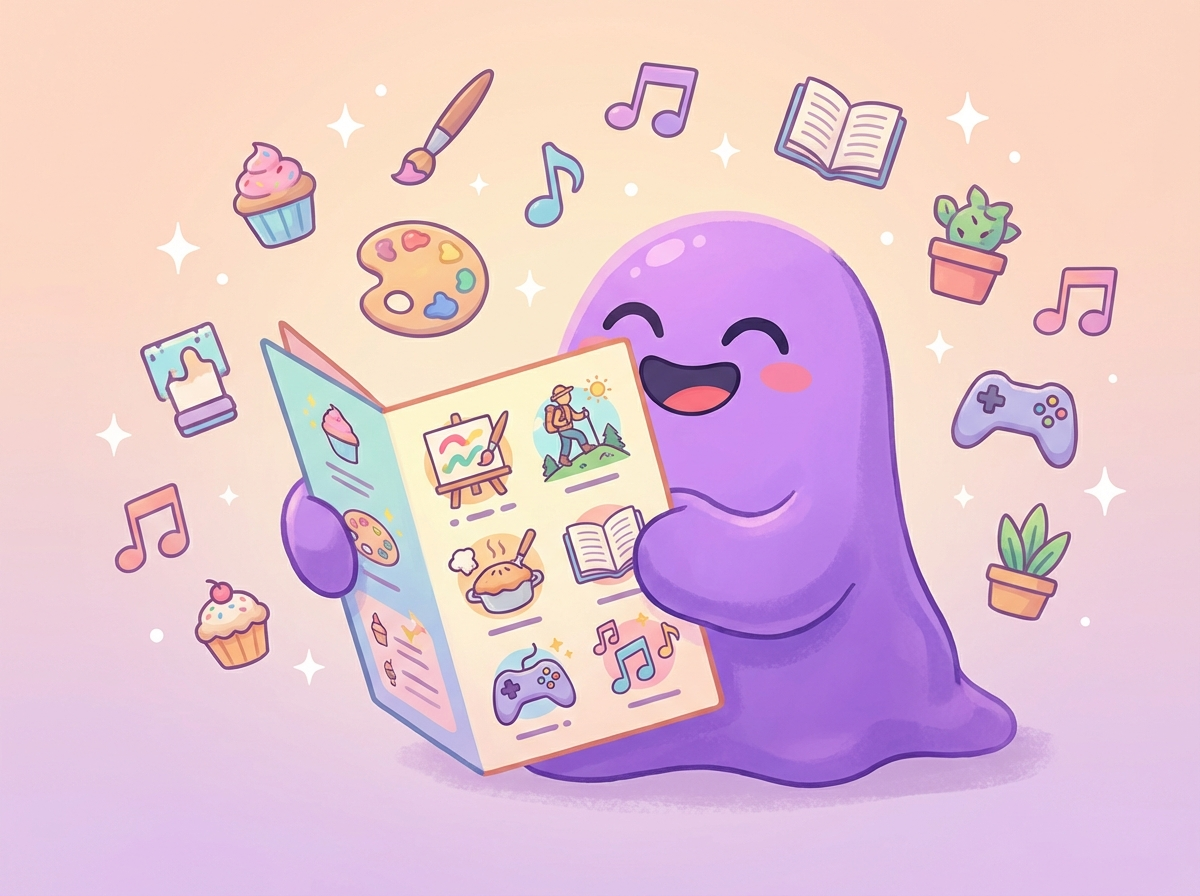
"A dopamine menu is a pre-planned list of enjoyable activities organized by time and energy requirements, designed to provide healthy dopamine boosts during low-motivation periods. Activities are typically categorized like a restaurant menu: appetizers (2-10 minutes), entrees (30-60 minutes), sides (activities to pair with others), and desserts (special treats for particularly difficult days)."
You know those days when your brain feels like it's running on a 3% battery while simultaneously trying to process a software update it didn't ask for? The days when even the prospect of choosing what to eat for lunch feels like being asked to solve a complex differential equation while someone plays loud, discordant music in the background? In the ADHD community, we call these 'bad brain days,' though they're certainly not exclusive to neurodivergent individuals.
Anyone who has experienced burnout, depression, high stress, poor sleep, or simply the accumulated exhaustion of modern existence knows exactly what this cognitive state feels like.
Here's the cruel irony that makes these days so particularly challenging: the very mental resources you need to figure out how to feel better are the exact resources that are depleted. Your prefrontal cortex, that magnificent planning and decision-making organ sitting behind your forehead, requires adequate dopamine to function properly. When dopamine levels drop, executive function follows suit, leaving you simultaneously desperate for relief and utterly incapable of determining how to achieve it.
This is precisely why the concept of a dopamine menu has gained such traction—you cannot rely on a depleted brain to make good decisions about how to replenish itself.
The solution is to make those decisions in advance.
Building Your Dopamine Menu
Understanding Dopamine: The Motivation Molecule You've Been Misunderstanding
Before we dive into creating your personal dopamine menu, we need to correct a pervasive misconception about dopamine itself. Popular culture has thoroughly mischaracterized dopamine as the 'pleasure chemical,' leading to endless articles about 'dopamine hits' from social media and the 'dopamine rush' of various activities. This framing, while catchy, fundamentally misrepresents what dopamine actually does in the brain, and this misunderstanding leads to poorly designed strategies for managing it.
Dopamine is not primarily about pleasure—it's about motivation, anticipation, and the drive to act. Neuroscientist Dr. Andrew Huberman describes dopamine as the molecule of 'more'—not the satisfaction of having something, but the desire to pursue it.
Research by Dr. Kent Berridge at the University of Michigan has clearly demonstrated the distinction between 'wanting' and 'liking' in the brain's reward system. Dopamine mediates wanting—the motivational push toward action—while the actual experience of pleasure involves different neurochemical systems, primarily opioids.
This distinction matters enormously for understanding bad brain days. When dopamine is depleted, you don't primarily lose the ability to feel pleasure; you lose the motivation to pursue it.
This is why someone in a low-dopamine state can intellectually know that going for a walk would make them feel better while being utterly unable to initiate the action of standing up and walking out the door. The wanting mechanism is offline. The bridge between knowing and doing has collapsed.
Your brain's dopamine system operates on prediction errors—the difference between expected and actual outcomes. When something is better than expected, dopamine spikes. When something is exactly as expected, dopamine remains stable.
When something is worse than expected, dopamine drops below baseline. This system evolved to help us learn and adapt, to pursue opportunities and avoid threats, but it has some quirky implications for modern life. One crucial implication is that novelty produces dopamine responses while routine does not.
The first time you try a delicious new restaurant, dopamine surges. The fifteenth visit to that same restaurant, ordering the same dish, produces minimal dopamine response. Your brain has already predicted this outcome accurately, so there's no prediction error to generate a signal.
This explains why activities that once brought joy can gradually become less motivating. The prefrontal cortex—the brain region responsible for executive functions like planning, decision-making, impulse control, and working memory—is exquisitely sensitive to dopamine levels.
Research has shown that both too little and too much dopamine impairs prefrontal function, with optimal performance occurring at moderate levels.
When you're in a depleted state, your capacity for executive function is directly compromised. Decision-making specifically requires dopamine because evaluating options, projecting future outcomes, and selecting among alternatives are all computationally expensive operations that the brain performs using dopaminergic circuits. A dopamine menu circumvents this problem by transforming an open-ended decision into a constrained selection from pre-approved options.
The decisions were already made by a version of you who had the cognitive resources to make them well.
Appetizers: Two to Ten Minute Boosts for Immediate Relief
Appetizers are your quick-hit options when you need something immediately accessible with minimal activation energy. These are not meant to solve everything; they're meant to provide enough of a boost that you can potentially move on to something more substantial, or they might simply help you survive the next few minutes until external circumstances change.
The key characteristics of good appetizer items are low barrier to entry, quick completion time, and reliable even if modest dopamine response. These should be activities you can do from wherever you currently are, ideally without needing to gather supplies or change locations.
Consider the act of stepping outside for exactly three minutes. Not a walk, not exercise, just opening the door and standing outside. The change in sensory environment—different temperature, different lighting, different sounds—provides a subtle neurological reset.
Research on nature exposure has shown that even brief contact with outdoor environments reduces cortisol and activates parasympathetic responses. You're not committing to anything; you're just changing your physical context momentarily. Playing a single song that you love and actually paying attention to it—not as background music, but as the primary activity—can produce meaningful dopamine responses.
Music activates reward circuitry remarkably effectively, with studies showing dopamine release in the nucleus accumbens during peak emotional moments in music listening. Choose songs you've established emotional connections with; this isn't the time for discovering new music. Smelling something pleasant offers another quick intervention.
Olfaction has direct pathways to emotional and memory centers in the brain, and certain scents like coffee, citrus, peppermint, or familiar comfort scents can produce immediate shifts in state. Keep a small collection of scent options accessible: essential oils, coffee beans, a favored perfume or cologne, herbs from the kitchen. Sending one text message to someone you care about, even if it's just an emoji or 'thinking of you,' creates a small social connection that can break the isolation of a bad brain day.
The anticipation of potential response provides its own small dopamine engagement.
The key is keeping it genuinely simple; this is not the time to compose a lengthy message that requires thought and editing. Other reliable appetizer options include drinking a full glass of very cold water where the temperature sensation provides a mild physiological jolt, doing a single simple stretch, looking at a few photos that reliably make you smile by creating an album specifically for this purpose in advance, writing down three things you can perceive with your senses right now as a mindfulness technique that requires minimal effort, or watching one short video from a creator you love that you've predetermined and bookmarked rather than searching for something to watch. The goal is having five to ten appetizers that genuinely appeal to you specifically—not activities you think you should enjoy, but ones that actually work for your particular brain.
Entrées: Thirty to Sixty Minute Deep Engagements
Entrées require more commitment but offer deeper engagement and more substantial restoration. These are for when you have some capacity and want to meaningfully shift your state rather than just survive the next few minutes. The increased time investment allows for activities that can induce flow states, provide genuine accomplishment feelings, or offer more complete emotional experiences.
Taking a proper shower—not a quick functional rinse but a full sensory experience—can be remarkably restorative. The combination of warm water, changing temperature, physical sensation, and the ritualistic nature of the process activates multiple regulatory systems. Make it intentional: use products with scents you enjoy, adjust water temperature mindfully, let yourself take the full time without rushing.
For many people, adding a waterproof speaker and music enhances the experience significantly.
The key is treating it as an activity in itself rather than just a hygiene task to complete. Watching a comfort show episode or two provides predictable emotional regulation through narrative engagement.
The key word here is comfort—this is not the time to start a new intense drama or something intellectually demanding. You want content your brain has already partially mapped, where you know the characters and tone, where there are no unpleasant surprises. The predictability is the point, not a bug.
Your brain can engage without needing to process novelty, and the familiar positive emotions provide gentle neurochemical support.
Think about your go-to shows that feel like putting on a warm blanket—those are your entrée viewing options. Going for a walk, particularly in a natural environment, combines movement, sensory change, and exposure to nature's regulatory effects. Even a walk around your neighborhood, if natural spaces aren't accessible, provides benefits.
The research on walking and cognitive function is robust: walking improves mood, enhances creative thinking, and provides gentle exercise that supports neurotransmitter function without the activation energy requirement of more intense physical activity. You're not training for anything; you're just moving through space and letting your brain process in the background. Cooking a simple meal you enjoy, especially if you follow a familiar recipe, provides multiple dopamine-relevant elements: a clear goal, step-by-step structure, sensory engagement, and a tangible outcome you can consume.
The structure is important; this is not the time for culinary experimentation but for comfort food you know how to make. The process provides occupation without demanding creativity, and the result offers both accomplishment and nourishment. There's something deeply satisfying about producing something tangible and edible when everything else feels intangible and overwhelming.
Doing a creative activity with low stakes—coloring in an adult coloring book, playing with clay, doodling without intention, playing an instrument without practicing—engages creative circuits without the pressure of producing anything meaningful.
The key is removing all goals beyond engagement itself. You're not making art; you're giving your hands something to do while your brain processes whatever it needs to process. Playing a video game you already know well, particularly something with clear objectives and satisfying progression mechanics, can provide structured engagement that occupies attention without demanding decision-making about what to do next.
Games with established patterns like farming simulators, puzzle games, or replaying familiar RPG sections work better than competitive games or content you haven't played before, which would require learning and adaptation.
Sides and Desserts: Pairing Activities and Special Treats
Sides are a unique category that emerged from the ADHD community's recognition that sometimes activities are more accessible when combined with something else. If you've ever noticed that you can focus on a podcast while doing dishes but not while sitting still, or that you can finally process your emotions while driving, you understand the principle. These are activities that either enhance other activities or become accessible when paired with something else.
They're listed separately because their value is in combination, not in isolation. Listening to podcasts or audiobooks provides cognitive occupation that makes physical tasks more accessible.
The key insight is that for many brains, having one form of input actually enables another form of action rather than competing with it. Washing dishes while listening to a podcast makes both activities more sustainable than either alone. Having a show on in the background while doing something tactile like folding laundry, organizing items, or simple cleaning combines visual and narrative engagement with physical movement.
Neither activity demands full attention, and the combination provides more complete occupation than either alone. body doubling—doing an activity while someone else is present, either in person or virtually—leverages social regulation to make tasks accessible. There are now online body doubling services and communities where people work silently in each other's virtual presence. The mechanism likely involves both social accountability and the subtle stress-regulation that occurs in safe company.
Drinking something warm and comforting while doing almost anything adds a small pleasure boost and the mild stimulant effects of caffeine if you're having tea or coffee. The warmth itself activates comfort responses, and having a favorite beverage can transform an otherwise neutral activity into something slightly more appealing. Desserts require explanation because they're often misunderstood.
These are not inherently better than other categories; they're items you deliberately limit to maintain their power. Desserts are the activities that might become problematic if used daily through habituation, expense, or opportunity cost but are perfect occasional interventions for particularly bad days. Think of desserts as the neurochemical equivalent of actual desserts in eating: enjoyable, sometimes exactly what you need, but not intended for every meal.
By keeping these items special, you preserve their dopamine punch. Using them daily would trigger habituation, and they'd lose their effectiveness. Ordering your favorite takeout food, rather than cooking, removes all activation barriers while providing strong comfort and anticipation.
This works partly because it involves novelty relative to your regular eating and partly because someone else handles all the preparation. The expense or health implications make it inappropriate for daily use, but for a bad brain day, it can be exactly right. Taking a full mental health day if possible—canceling or rescheduling obligations, explicitly giving yourself permission to do nothing productive—removes the background stress of what you 'should' be doing.
This only works if you can genuinely release the guilt, which requires practicing the skill of self-permission. Buying yourself something small, whether a book, a plant, or a small item you've been eyeing, provides the specific pleasure of acquisition. This should be genuinely small and affordable, not retail therapy that creates financial stress later.
The dopamine response to purchasing comes substantially from the anticipation and acquisition, not from having the item, so keeping purchases small and occasional preserves the effect. Scheduling time with a person who reliably makes you feel good draws on social regulation in a more substantial way than a quick text. Human connection is one of the most powerful emotional regulators we have.
Taking a long bath with full accoutrements—candles, bath products, ambient sound, a beverage, a book or show—transforms a functional activity into an indulgent sensory experience.
Building and Using Your Personal Dopamine Menu
Creating an effective dopamine menu requires self-knowledge, which itself requires observation and reflection. You cannot simply copy someone else's menu because the activities that produce dopamine responses for them may not produce the same responses for you. Our reward systems are shaped by genetics, life experiences, learned associations, and individual neurology.
The general categories transfer, but the specific contents must be yours. Before building your menu, spend a week or two deliberately noticing what activities improve your state when you're struggling.
This isn't about what you think should work or what you've been told works; it's about what actually produces observable changes in your mood, energy, or motivation.
When you notice yourself feeling better after an activity, note it somewhere.
When you finish something and realize you feel worse, note that too. Pay attention to activities you gravitate toward naturally when you have some capacity, and notice which ones actually help versus which ones feel like they should help but don't. Some people find that exercise improves their state reliably; others find it depleting when they're already low.
Some people find phone calls with friends energizing; others find them draining even when they enjoy the conversation. Your menu should contain activities that work for your specific brain, not activities you feel obligated to include because they're supposed to be good for you. Once you have a collection of activities that genuinely help, sort them by two dimensions: how much activation energy they require to start and how much time they take once started.
Be honest about activation energy. Something might be extremely pleasant once you're doing it but nearly impossible to start. That high-barrier activity might still belong on your menu, but it should be categorized accurately.
Check that you have multiple options in each category. A menu with fifteen entrée items but only one appetizer won't serve you well. Aim for at least five items per category, knowing that on any given day, several of them might not feel accessible.
Also ensure variety within categories—if all your appetizers involve looking at your phone, you have a gap.
Here's where many well-intentioned dopamine menus fail: they exist only as a concept, or as a note buried in an app you won't open when struggling. The menu needs to be immediately, effortlessly accessible when you need it. A physical copy posted somewhere you'll see it means you don't need to remember the menu exists.
A phone wallpaper or lock screen image with key items means it's visible every time you check your phone. Perhaps the most important skill in using a dopamine menu is learning to select and initiate an activity without waiting to feel motivated to do it. When dopamine is depleted, nothing sounds appealing, so waiting for appeal means waiting forever.
Instead, you're looking for 'least unappealing' or even just pointing at something arbitrarily. The selection doesn't need to feel right. You're trusting the process, not your current feelings about the process.
Your past self selected these items because they help. Your current self's job is just to pick one and start. This requires accepting that the desire to do the activity will likely come after you start, not before.
This is actually how dopamine works: the anticipation response often activates only once pursuit has begun. You have to start moving toward the thing before your brain generates the motivation to continue moving toward it.
Common Mistakes and When to Seek Additional Support
Even with the best intentions, dopamine menus can fail. Understanding the common failure modes helps you design around them. The most common failure is including activities you think you should do rather than activities that actually help.
Your menu includes 'exercise,' 'meditate,' 'journal,' and other approved self-care activities because you've absorbed messaging that these things are good for mental health. But you don't actually enjoy these activities, they don't reliably improve your state, or the activation energy required makes them inaccessible when you're struggling. The menu is not an aspirational document of who you wish you were.
It's a practical tool based on who you actually are. If playing video games helps your mental state more than meditation does, video games go on the menu. Another common mistake is not being specific enough.
Generic items like 'watch something' or 'call a friend' require additional decisions when you try to use them. Watch what? Call which friend?
These sub-decisions can derail the entire effort. Specific items like 'watch the pilot episode of Schitt's Creek' or 'text Maya and ask how her cat is' reduce decision load to near zero. Only including solo activities is another gap to watch for.
Human connection is one of the most powerful regulators of emotional state, but in depleted states we often avoid it because reaching out feels hard. Ensuring your menu includes some social options, even minimal ones like sending a single text, maintains access to social regulation when you need it. Forgetting to update the menu causes problems over time.
Your preferences, circumstances, and responses to activities change. A menu created six months ago may contain items that no longer work well for you, may be missing new discoveries that work great, and may include activities that are no longer accessible. Schedule periodic reviews—perhaps quarterly—to audit your menu.
Finally, if using your dopamine menu starts to feel like another task on your to-do list, another thing you're failing to do properly, another source of self-judgment, it's backfired. The menu is meant to be an offering of kindness to yourself, a set of gifts your past self prepared for your struggling present self. A dopamine menu is a self-management tool, not a treatment for clinical conditions.
If you're experiencing persistent depression, untreated ADHD, chronic burnout, or other significant mental health challenges, the menu can help with day-to-day coping but won't address underlying conditions. Signs that you might need support beyond self-management tools include bad brain days becoming more frequent than good days, your menu items stopping working despite updating and rotating them, increasing inability to function in required domains like work, basic self-care, or relationships, and thoughts of self-harm or suicide. If you recognize these signs, the compassion that led you to create a dopamine menu should also lead you toward professional support.
Seeking help is not failure; it's extension of the same self-care impulse into domains where self-care alone isn't sufficient. The deeper psychology of the dopamine menu deserves acknowledgment: creating one is an act of self-compassion enacted through planning. It says: I know future me will struggle, and I'm preparing help in advance.
I take my wellbeing seriously enough to invest time now for benefit later. I am worth the effort of care.
Scientific Context
The concept of 'dopamine menus' was popularized in the ADHD community as a tool for intentional stimulation, drawing on neuroscience research about dopamine's role in motivation and the effects of decision fatigue on depleted states.
Related Reading
Regulation shouldn't be work.
Nomie helps you build and access your digital dopamine menu exactly when you need it. The app detects patterns in your scrolling behavior that suggest you're reaching for stimulation and gently surfaces your pre-planned menu options instead. You can categorize activities by time and energy, track which ones actually improve your state, and refine your menu over time based on real data about what works for your specific brain. When decision-making feels impossible, Nomie can even suggest a random appetizer to get you started—because sometimes the hardest part is just picking something.
Frequently Asked Questions
What is a dopamine menu?
A dopamine menu is a pre-planned list of enjoyable activities organized by time and energy requirements, designed to provide healthy dopamine boosts during low-motivation periods. Activities are typically categorized like a restaurant menu: appetizers (2-10 minutes), entrees (30-60 minutes), sides (activities to pair with others), and desserts (special treats for particularly difficult days). The structure allows quick, low-effort selection when executive function is compromised.
Why do I need to create my dopamine menu in advance?
When you're experiencing a bad brain day, executive function is already compromised. Decision-making requires dopamine, but your dopamine is depleted—creating a catch-22. By creating your menu when you're feeling good, you bypass this problem entirely. Your past self makes the decisions so your struggling present self just has to pick from the list.
How is a dopamine menu different from a self-care list?
While both serve wellbeing, a dopamine menu is specifically organized by activation energy required and time commitment. Self-care lists are often generic and overwhelming when you're depleted. A dopamine menu acknowledges that different brain states need different interventions—sometimes you have 5 minutes and zero energy, other times you have an hour and moderate motivation. The categorization makes selection effortless.
Can neurotypical people benefit from dopamine menus?
Absolutely. While dopamine menus emerged from the ADHD community, anyone who experiences motivation fluctuations, stress, burnout, or difficult mental health days can benefit. The underlying neuroscience of dopamine and decision fatigue applies to all human brains. Having pre-planned healthy options prevents defaulting to less beneficial coping mechanisms.
What if nothing on my dopamine menu sounds appealing?
This is completely normal and expected. When dopamine is severely depleted, nothing feels appealing—that's the nature of the neurochemistry. The menu isn't about finding something that sounds exciting; it's about picking the least unappealing option and starting. Often, dopamine release begins after you start an activity, not before. Trust the system even when motivation is absent.
How often should I update my dopamine menu?
Review your menu every few months or whenever you notice items no longer bring joy. Our preferences change, seasonal activities shift, and you'll discover new things that work well for you. Keep the menu as a living document—remove activities that have lost their spark and add new discoveries. Some people update quarterly; others adjust after particularly successful or unsuccessful bad brain days.
Should I include screen-based activities on my dopamine menu?
Yes, but thoughtfully. The goal isn't to eliminate screens but to curate which screen activities provide genuine satisfaction versus empty stimulation. A comfort movie you've watched dozens of times might be perfect for a bad brain day. Doom-scrolling social media typically isn't. Include specific shows, games, or content rather than open-ended 'browse phone' to avoid falling into infinite scroll traps.
What's the difference between appetizers and desserts on a dopamine menu?
Appetizers are quick, low-effort activities (2-10 minutes) designed for frequent use that provide gentle dopamine boosts. Desserts are special treats reserved for particularly difficult days—activities that might be more indulgent, time-consuming, or resource-intensive. Using desserts daily diminishes their power through tolerance, so they're kept special for when you really need them.
Continue Reading
View All PostsNomie vs Finch: Somatic AI Wellness or Virtual Pet Gamification?
Finch gamifies self-care with a virtual pet bird. Nomie calms your nervous system with somatic tools. Here's which approach actually fits your needs.
Anxiety Dizziness and Lightheadedness: Why It Happens and What Helps
Feeling dizzy during anxiety can be terrifying—but it’s usually a nervous-system + breathing effect, not a sign you’re about to faint. Learn common causes and how to steady yourself.
Anxiety Tingling and Numbness: Causes, Meaning, and How to Stop It
Pins and needles during anxiety can feel alarming—especially in hands, face, or lips. Learn why it happens (often breathing + adrenaline) and how to calm it down safely.