Decision Fatigue: Why You Can't Decide What to Eat After a Long Day
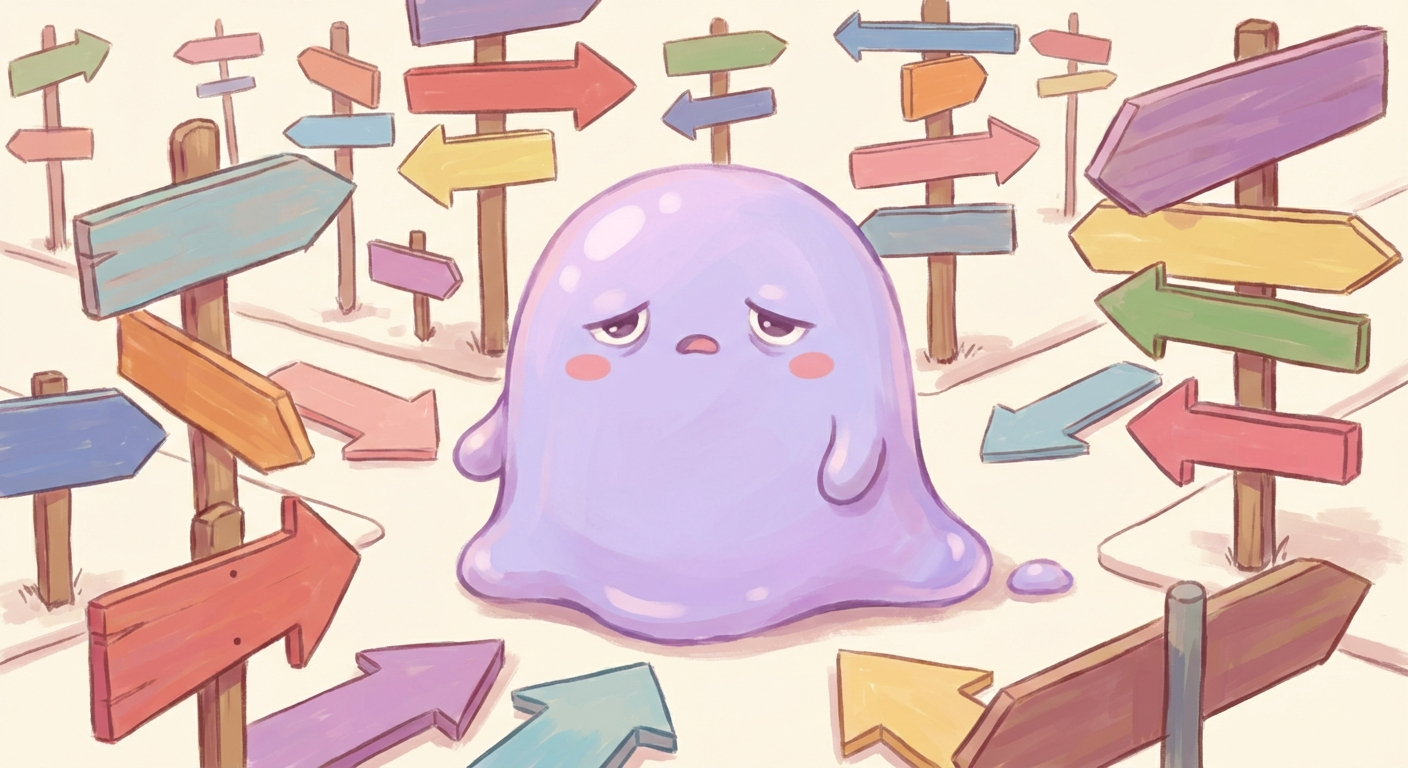
"Decision fatigue is the deteriorating quality of decisions made by an individual after a long session of decision-making. As willpower depletes, people tend to make impulsive choices, avoid decisions entirely, or default to the easiest option regardless of consequences."
It's 7 PM. You've made approximately 35,000 decisions today—most of them unconsciously. Now your partner asks what you want for dinner and your brain simply... refuses.
This isn't pickiness. It isn't laziness. It's decision fatigue—the measurable decline in decision-making quality that happens when your mental resources are depleted. And in our modern world of infinite options and constant choices, it's becoming an epidemic.
Studies show that judges make more favorable parole decisions in the morning, that shoppers buy more impulsively late in shopping trips, and that doctors prescribe more unnecessary antibiotics as the day goes on. The same brain that made sharp decisions at 9 AM becomes a coin-flip machine by 5 PM.
Understanding and Combating Decision Fatigue
The Science of Mental Depletion
Your brain uses glucose to make decisions. Every choice—from what to wear to how to respond to an email—draws from a limited daily supply of mental energy. This isn't metaphor; it's measurable biology.
Research by social psychologist Roy Baumeister established that self-control and decision-making share a common resource. When you resist the cookie in the morning, you have less willpower available for the difficult conversation in the afternoon. When you spend all day making complex choices at work, you have nothing left for personal decisions at home.
The effects of decision fatigue include: defaulting to the easiest option ("whatever you want is fine"), avoiding decisions entirely ("let's just not go out"), making impulsive choices ("I'll just get the unhealthy thing, I don't care anymore"), increased irritability around choices ("why does everything require a decision?!"), and declining quality in decisions that actually matter.
This explains why willpower fails most often in the evening, why diets collapse at night, and why you can spend an hour deciding what movie to watch and then pick nothing.
Decision Fatigue in the Modern World
Our ancestors made far fewer decisions. What to eat? Whatever was available. What to wear? The one set of clothes you owned. What to do today? Whatever survival required.
Now we face choice overload at every turn: 50,000 products in a supermarket, infinite content to stream, countless responses to any email, dozens of potential ways to spend each hour. Digital life amplifies this exponentially. Every notification demands a micro-decision: respond now, later, or ignore? Every app offers choices. Every scroll presents options.
The result is that many people arrive at their evenings with their decision-making capacity completely depleted—precisely when they face personal choices about relationships, health, and wellbeing. Work gets our fresh minds; life gets the exhausted leftovers.
This isn't just inconvenient—it has real consequences. Important personal decisions (should I exercise? should I have that difficult conversation? should I work on my side project?) get made by a depleted brain that just wants the path of least resistance.
Signs You're Suffering from Decision Fatigue
Decision fatigue often goes unrecognized because it doesn't feel like tiredness—it feels like not caring, like everything being equally unappealing, like wanting someone else to just decide.
Analysis paralysis. You research endlessly without concluding. Every option has pros and cons, and you can't commit.
Defaulting to nothing. Rather than choosing between restaurants, you stay home. Rather than picking an activity, you scroll your phone.
Impulsive shortcuts. After careful restraint all day, you buy the thing, eat the thing, say the thing you know you shouldn't.
Irritability around choices. Questions like "what do you want to do?" trigger frustration rather than opportunity.
Option avoidance. You gravitate toward situations with fewer choices—same restaurant, same order, same routine—not out of preference but exhaustion.
Procrastination on decisions. Important choices keep getting pushed to tomorrow, when you'll theoretically have more capacity.
Strategic Decision Reduction
The most effective approach to decision fatigue isn't building more willpower—it's eliminating unnecessary decisions so your limited capacity goes toward what actually matters.
Automate the trivial. Steve Jobs wore the same outfit daily. Many successful people eat the same breakfast every morning. This isn't boring—it's strategic. Every decision you automate is capacity preserved for decisions that matter.
Front-load important decisions. Make significant choices in the morning when resources are fresh. Schedule difficult conversations, creative work, and important meetings early. Save administrative tasks and routine work for depleted hours.
Create defaults. Instead of deciding each time, establish rules: "On Wednesdays, we have pizza." "I exercise before work on Tuesdays and Thursdays." "If I can't decide in 5 minutes, I flip a coin." Defaults remove the decision entirely.
Batch decisions. Instead of making grocery decisions daily, plan the week on Sunday. Instead of choosing outfits each morning, select them Sunday night. Batching consolidates decision-making into protected windows.
Limit options. Artificially constrain your choices. Instead of "any restaurant in the city," choose from three favorites. Instead of "any possible activity," pick from a pre-made list. Fewer options means faster, easier decisions.
Restoring Depleted Willpower
While reducing decisions is the best prevention, restoration is also possible.
Glucose helps. Research shows that decision-making quality improves after eating, particularly foods that raise blood sugar. This isn't license to live on candy—but it explains why you can't decide anything when hungry.
Sleep restores capacity. Decision fatigue accumulates within a day but resets with sleep. This is why morning willpower exceeds evening willpower. Protecting sleep protects decision-making capacity.
Breaks help. Short breaks during the day—even 10 minutes—can partially restore depleted resources. The judges in parole studies made better decisions right after breaks, regardless of time of day.
Stress accelerates depletion. Anxiety burns through decision-making resources faster. Managing baseline stress through regulation practices preserves capacity for actual choices.
Positive mood helps. Research shows that positive emotional states seem to buffer against or restore willpower depletion. Small mood boosts—a walk, music, pleasant interaction—may help decision quality.
When Decision Fatigue Meets Digital Life
Phones and apps are decision machines. Every scroll presents options. Every notification demands response. The infinite choice of digital content—what to watch, read, engage with—depletes resources that could go toward meaningful decisions.
Doomscrolling is often decision fatigue's final form: your brain, depleted of capacity to choose anything meaningful, defaults to the lowest-friction option (endless scroll) while simultaneously being bombarded with micro-choices (engage? scroll past? click?).
This creates a vicious cycle: digital overwhelm depletes decision capacity, which makes thoughtful engagement impossible, which leads to more passive consumption, which continues depleting resources.
Breaking this cycle requires reducing digital decision load: curated feeds with fewer options, app blockers that remove choices, and intentional "no-decision" digital spaces where you're not constantly choosing what to engage with.
Nomie serves this function—replacing the infinite decisions of social media with a curated, low-decision wellness experience. You don't choose what to scroll through; the app provides what you need.
Scientific Context
Decision fatigue research is built on the work of social psychologist Roy Baumeister, whose ego depletion model demonstrated that self-control and decision-making draw from a shared, limited resource. Subsequent research has shown practical effects in judicial decisions, medical prescriptions, and consumer behavior.
Related Reading
Regulation shouldn't be work.
Digital life bombards you with decisions. Every scroll, every notification, every option depletes the finite resource you need for choices that actually matter.
Nomie reduces digital decision load. Instead of infinite content requiring constant choice, Nomie provides a curated, low-decision wellness experience. You don't have to decide what to engage with—just open the app and receive what you need.
Frequently Asked Questions
Is decision fatigue real?
Yes. Decision fatigue is well-documented in research. Studies show measurable declines in decision quality after periods of decision-making, affecting everyone from judges to doctors to shoppers. The phenomenon is linked to glucose depletion and shared self-control resources.
How many decisions do we make per day?
Estimates vary, but research suggests adults make around 35,000 remotely conscious decisions daily. Most of these are trivial, but they all draw from the same limited resource. Digital life has dramatically increased this number.
How do I know if I have decision fatigue?
Signs include: defaulting to "whatever is easiest," analysis paralysis on even small choices, irritability when asked to decide things, impulsive choices late in the day, and consistently procrastinating on decisions. If evening you consistently makes worse choices than morning you, decision fatigue is likely involved.
Can you build willpower like a muscle?
The research is mixed. Some studies suggest self-control can be strengthened through practice. However, the more practical approach is conservation—eliminating unnecessary decisions so your limited capacity goes toward what matters, rather than trying to expand capacity that seems fundamentally limited.
Continue Reading
View All PostsNomie vs Finch: Somatic AI Wellness or Virtual Pet Gamification?
Finch gamifies self-care with a virtual pet bird. Nomie calms your nervous system with somatic tools. Here's which approach actually fits your needs.
Anxiety Dizziness and Lightheadedness: Why It Happens and What Helps
Feeling dizzy during anxiety can be terrifying—but it’s usually a nervous-system + breathing effect, not a sign you’re about to faint. Learn common causes and how to steady yourself.
Anxiety Tingling and Numbness: Causes, Meaning, and How to Stop It
Pins and needles during anxiety can feel alarming—especially in hands, face, or lips. Learn why it happens (often breathing + adrenaline) and how to calm it down safely.