Revenge Bedtime Procrastination: Why You Stay Up Late Despite Being Exhausted
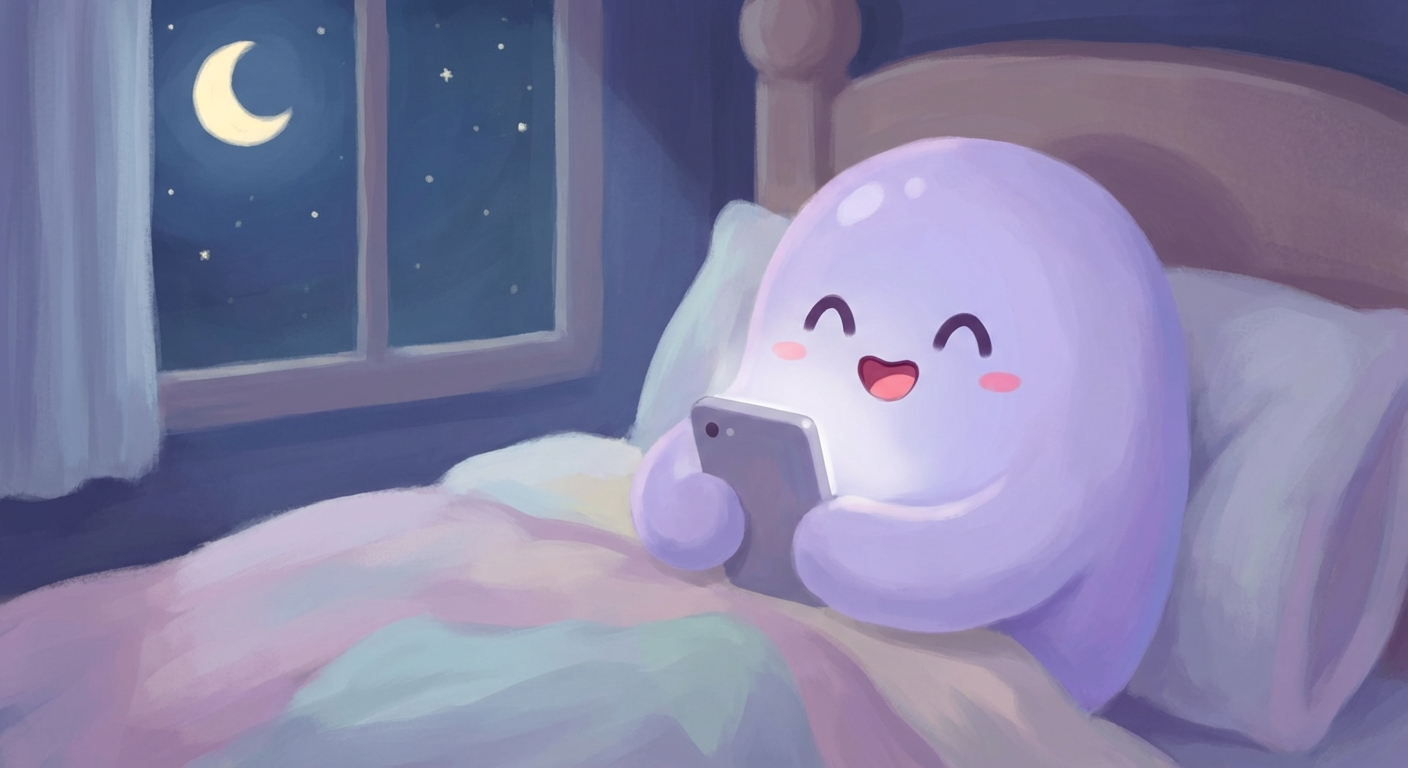
"Revenge bedtime procrastination is deliberately staying awake late despite knowing you'll regret it, as a way to reclaim personal time and autonomy after days that feel controlled by external demands. The 'revenge' is against a schedule that leaves no space for yourself."
It's 1 AM. You're exhausted. You have to be up at 6:30. You know you'll hate yourself tomorrow. And yet here you are, scrolling through your phone for 'just five more minutes' that turned into two hours. You're not an idiot. You understand sleep is important. So why can't you just go to bed?
This pattern has a name: revenge bedtime procrastination. The term originated in China, where crushing work schedules leave people feeling they have zero control over their waking hours. The only time that feels like yours is late at night, after everyone else's demands have been met. So you stay awake, even when your body is screaming for rest, because this sliver of time is the only part of your day that belongs to you.
The 'revenge' isn't against sleep itself. It's against a life structured around obligations, productivity, and other people's needs. Late night scrolling, gaming, reading, or watching shows becomes an act of reclaiming agency. The problem is you're stealing from future you to give present you a sense of control. Understanding why this happens is the first step toward finding better ways to meet the underlying need.
Understanding and Breaking the Revenge Bedtime Procrastination Cycle
What Drives Revenge Bedtime Procrastination
The psychology behind staying up late when you're exhausted makes perfect sense once you understand the underlying need. During your waking hours, you're executing a schedule largely determined by external forces: work deadlines, family needs, commute times, appointments, obligations. Even if you enjoy your job and love your family, the structure of your day often feels imposed rather than chosen.
Autonomy is a core psychological need. Humans require some sense of control over their lives to feel okay. When your entire day is spoken for, your brain starts looking for opportunities to assert choice. Late night becomes that opportunity because it's the only time no one is making demands. You can finally do what you want instead of what you have to do.
The 'revenge' framing captures the emotional tone. You're not just staying up late—you're taking back something that was taken from you. There's a defiant quality to the behavior, a sense of 'this time is mine and I'm going to use it how I want.' The fact that you'll pay for it tomorrow almost doesn't matter because the need for autonomy in the present moment is so strong.
Digital technology amplifies this pattern because it provides infinite novelty with zero effort. You don't have to plan an activity or go anywhere. Just pick up the device already in your hand and suddenly you have access to entertainment, social connection, information, shopping, games. The friction between 'I should sleep' and 'I want more time for myself' is resolved by the path of least resistance, which is scrolling.
For many people, especially those with demanding jobs or caretaking responsibilities, revenge bedtime procrastination is the only 'self-care' time they get. The cruel irony is that chronic sleep deprivation makes everything harder, including tolerating the schedule that drives the behavior. You're too tired to set boundaries or restructure your day, so you keep stealing from sleep, which makes you more tired, perpetuating the cycle.
How It Differs from Regular Insomnia
Revenge bedtime procrastination and insomnia are different problems requiring different solutions. Insomnia is difficulty falling or staying asleep despite having the opportunity and desire to sleep. Your body wants rest but your nervous system won't downregulate. The issue is physiological—you can't sleep even though you're trying.
Revenge bedtime procrastination is choosing not to attempt sleep despite exhaustion. The issue is behavioral and psychological. You could sleep if you put down the phone and turned off the light, but you're actively choosing not to because staying awake meets an emotional need. You're delaying the attempt to sleep, not struggling to achieve it.
The distinction matters because treatment approaches differ. Insomnia often responds to sleep hygiene, cognitive behavioral therapy for insomnia, anxiety management, or addressing underlying conditions like sleep apnea. Revenge bedtime procrastination requires addressing the autonomy deficit and restructuring your waking hours so you don't need to steal time from sleep.
That said, the two can coexist and compound each other. Chronic sleep deprivation from revenge procrastination can create hyperarousal that makes it harder to fall asleep even when you do try. Anxiety about not sleeping can drive you to stay up later procrastinating because you're dreading the struggle to fall asleep. Untangling which came first helps target the intervention.
Many people also experience delayed sleep phase syndrome, where their natural circadian rhythm runs later than conventional schedules demand. If you're naturally a night person forced into a morning schedule, late night feels like your true awake time. This isn't revenge procrastination—it's circadian biology. Understanding whether you're fighting your biology or your schedule helps identify solutions.
The Nervous System Component
While revenge bedtime procrastination is primarily a psychological pattern, there's a nervous system component that makes it harder to break. After a day of sustained sympathetic activation—meeting demands, solving problems, responding to stress—your system needs transition time to shift into the parasympathetic state required for sleep.
Many people use late night scrolling as an attempt at this transition. The problem is screens provide the opposite of what your nervous system needs. Blue light suppresses melatonin. Novel content keeps your brain activated. Social media and news can trigger emotional responses that amp you up rather than calm you down. You're trying to use a stimulating activity to achieve a calming state, which doesn't work.
The exhaustion you feel isn't the same as nervous system calm. You can be simultaneously tired and wired—depleted of energy but still physiologically activated. This is common in people with chronic stress or anxiety. Your body wants rest but your nervous system is still in alert mode, scanning for threats or unfinished tasks. Sleep requires both physical tiredness and nervous system downregulation.
Revenge procrastination often kicks in during that wired-but-tired state. You're too activated to feel ready for sleep but too exhausted to do anything that requires real effort. Scrolling hits the sweet spot—it requires minimal effort but provides just enough stimulation to keep your alert system engaged. You get the feeling of doing something for yourself without having to muster energy you don't have.
This creates a trap. You need nervous system downregulation to sleep, but you're using the late-night time to stay activated. The longer you stay up, the more sleep-deprived you become, which narrows your window of tolerance and makes you more reactive to stress tomorrow, which means tomorrow night you'll feel even more desperate for personal time. Breaking the pattern requires real regulation practices, not just screen-based distraction.
Screen Time, Doomscrolling, and the Revenge Cycle
The relationship between revenge bedtime procrastination and doomscrolling is particularly toxic. You're already in a vulnerable state—tired, depleted, emotionally drained from the day. This is when your prefrontal cortex has the weakest control over impulses and emotional regulation. You're most susceptible to algorithm-driven engagement.
Social media platforms are designed to maximize time-on-app, which means they're particularly effective at hooking you when you're in this state. The algorithm learns that late-night you engages with different content than daytime you—often more emotionally charged, more comparison-driven, more doom-focused. So that's what gets served. What started as reclaiming personal time becomes a spiral of consuming content that makes you feel worse.
The cruel part is the behavior that's supposed to be 'revenge' against a life that feels bad often makes you feel worse. You stay up to give yourself something enjoyable, but end up doom-scrolling content that increases anxiety, comparing yourself to others' highlight reels, or consuming news about problems you can't solve. You go to bed not just sleep-deprived but also more anxious, inadequate, or hopeless than when you started.
Awareness of this pattern often doesn't stop it because the need driving the behavior is real. Knowing that scrolling makes you anxious doesn't eliminate the need for autonomy and personal time. This is why 'just put your phone down' advice fails—it addresses the symptom without meeting the underlying need.
Some people use late-night screen time specifically to avoid their thoughts. The day's stress, unresolved emotions, or existential anxiety feel manageable as long as you're distracted. The moment you put down the phone and lie in darkness with your thoughts is when everything surfaces. Scrolling becomes avoidance, and the later it gets, the more anxious you become about facing what comes up when you stop.
Reclaiming Time Without Sacrificing Sleep
Breaking revenge bedtime procrastination requires restructuring your waking hours to include genuine personal time, not just trying harder to go to bed earlier. If the root cause is autonomy deficit, the solution is creating space for yourself before you're exhausted and the only option is stealing from sleep.
Protected personal time needs to be built into your schedule the same way work meetings are. This might be 30 minutes after work before family time starts, an early morning before anyone else is awake, a lunch break spent doing what you want, or weekend mornings. It doesn't have to be hours—even short pockets of genuine choice can reduce the desperation that drives late-night procrastination.
The time needs to be truly discretionary. Not exercise because you 'should,' not productive hobbies, not self-improvement. Just time where you do exactly what you feel like doing with zero obligation or optimization. The point is restoring a sense of autonomy, which only happens when choices are genuinely free.
Boundary setting is often necessary. If your entire day is consumed by work and family needs, something has to give. That might mean saying no to extra projects, asking your partner to handle bedtime one night a week, lowering housework standards, or protecting lunch breaks from meetings. The alternative is continuing to steal from sleep, which eventually degrades your capacity to function in all those demanding areas.
Transition rituals help your nervous system shift from the day's demands to personal time to sleep. This might look like: hard stop on work at 6pm, 20 minutes of movement or time outside to discharge the day's activation, personal time doing something genuinely enjoyable (not screens), wind-down routine starting 30 minutes before target sleep time. The ritual signals to your brain that you've had personal time and don't need to stay up late claiming it.
For people with genuinely incompatible schedules (shift workers, new parents, people caring for sick family members), the solution may be redefining what 'enough' sleep looks like and finding other places to meet autonomy needs. Sometimes acceptance that you're in a temporary period where sleep is compromised helps more than fighting reality.
Practical Strategies for Tonight
Long-term solutions require restructuring your life. But if you're caught in the pattern right now, here are interventions that actually work without requiring your entire schedule to change first.
Set a decision point, not a bedtime. Instead of 'I'll go to bed at 11,' set a time when you consciously decide whether to stay up or sleep. Maybe at 11 you genuinely choose to stay up another hour reading because you need that time. Making it a conscious choice rather than compulsive procrastination changes the dynamic. You're exercising autonomy through the decision itself, not just by staying awake.
Replace scrolling with actual rest. If you're going to stay up, do something that's genuinely restorative rather than screen-based stimulation. Read physical books, take a bath, do gentle stretching, listen to music in the dark, practice somatic exercises. You still get personal time, but you're not dysregulating your nervous system further.
Use the 20-minute rule. When you notice you're procrastinating sleep, commit to 20 minutes of genuinely restful activity, then reassess. Often the compulsive quality fades once you've had a small dose of choice. The initial resistance is about not wanting to be told what to do—once you've asserted autonomy by choosing the 20 minutes, sleep feels more acceptable.
Address the underlying emotion. Ask yourself what you'd be feeling if you weren't scrolling. Anxious about tomorrow? Sad about how your day went? Lonely? Angry that you had no time for yourself? Name the feeling, acknowledge it's real and makes sense, and see if there's a 2-minute intervention that addresses it more directly than scrolling. Sometimes just naming it deflates the compulsion.
Morning bargain. Remind yourself that staying up late steals from morning-you's capacity to make changes. If you're sleep-deprived, you won't have the energy or clarity to set better boundaries or restructure your schedule. Going to bed is investing in tomorrow-you's ability to create a life where you don't have to do this.
Compassion over discipline. This behavior makes sense. You're not weak or broken. You're trying to meet a real need the only way that's available. Beating yourself up creates more stress, which drives more revenge procrastination. The goal is understanding and addressing the need, not forcing yourself into submission.
Scientific Context
Research on bedtime procrastination shows strong associations with lack of self-regulation, high stress, and limited perceived control over daytime hours. The revenge variant, documented in cultures with intense work demands, reflects autonomy deficits rather than sleep disorders.
Related Reading
Regulation shouldn't be work.
The trap of revenge bedtime procrastination is trying to use screen time for rest when screens actually prevent the nervous system recovery you need. When you're exhausted but can't stop scrolling, what you're really seeking is regulation, not more content.
Nomie transforms late-night screen time into actual nervous system care. Instead of doomscrolling yourself into more anxiety, you get guided breathing exercises that activate your parasympathetic system, grounding techniques that discharge the day's activation, and somatic practices that help your body transition to sleep readiness. You still get screen time that feels like it's yours, but it actually supports rest instead of stealing from it.
Reclaim your nights by giving your nervous system what it actually needs.
Frequently Asked Questions
What is revenge bedtime procrastination?
Revenge bedtime procrastination is deliberately staying awake late despite exhaustion as a way to reclaim personal time after days that feel controlled by external demands. The 'revenge' is against a schedule that leaves no space for autonomy. It's not insomnia—you're choosing not to sleep because late night is the only time that feels like yours.
Why do I stay up late when I'm tired?
You stay up late despite exhaustion because late night is the only time that feels under your control. After a day of obligations and other people's demands, your brain craves autonomy. Staying awake becomes an act of reclaiming agency. The behavior makes psychological sense even though it harms you physically—you're meeting a real emotional need (autonomy) by sacrificing a physical need (sleep).
How do I stop revenge bedtime procrastination?
Breaking the pattern requires creating genuine personal time during waking hours so you don't need to steal from sleep. Build protected discretionary time into your schedule, set boundaries around work and obligations, use transition rituals to shift from demands to rest, and replace late-night scrolling with actually restorative activities. The solution isn't forcing yourself to bed earlier—it's restructuring your day so late night isn't your only autonomy.
Is revenge bedtime procrastination the same as insomnia?
No. Insomnia is difficulty falling or staying asleep despite wanting to sleep—a physiological issue. Revenge bedtime procrastination is choosing not to attempt sleep despite exhaustion—a behavioral issue driven by autonomy needs. With insomnia, you can't sleep. With revenge procrastination, you won't sleep. They require different interventions, though chronic procrastination can eventually create insomnia.
Why is it called revenge bedtime procrastination?
The term originated in China describing people staying up late to reclaim time after crushing work schedules. The 'revenge' captures the emotional tone—it's not just delaying sleep, it's an act of defiance against a life structure that feels imposed. You're taking back something that was taken from you, even though the cost is your own wellbeing. The name reflects both the psychological driver (autonomy) and the self-sabotaging nature of the behavior.
Continue Reading
View All PostsNomie vs Finch: Somatic AI Wellness or Virtual Pet Gamification?
Finch gamifies self-care with a virtual pet bird. Nomie calms your nervous system with somatic tools. Here's which approach actually fits your needs.
Anxiety Dizziness and Lightheadedness: Why It Happens and What Helps
Feeling dizzy during anxiety can be terrifying—but it’s usually a nervous-system + breathing effect, not a sign you’re about to faint. Learn common causes and how to steady yourself.
Anxiety Tingling and Numbness: Causes, Meaning, and How to Stop It
Pins and needles during anxiety can feel alarming—especially in hands, face, or lips. Learn why it happens (often breathing + adrenaline) and how to calm it down safely.