Attachment Anxiety in Relationships: Why You Feel This Way
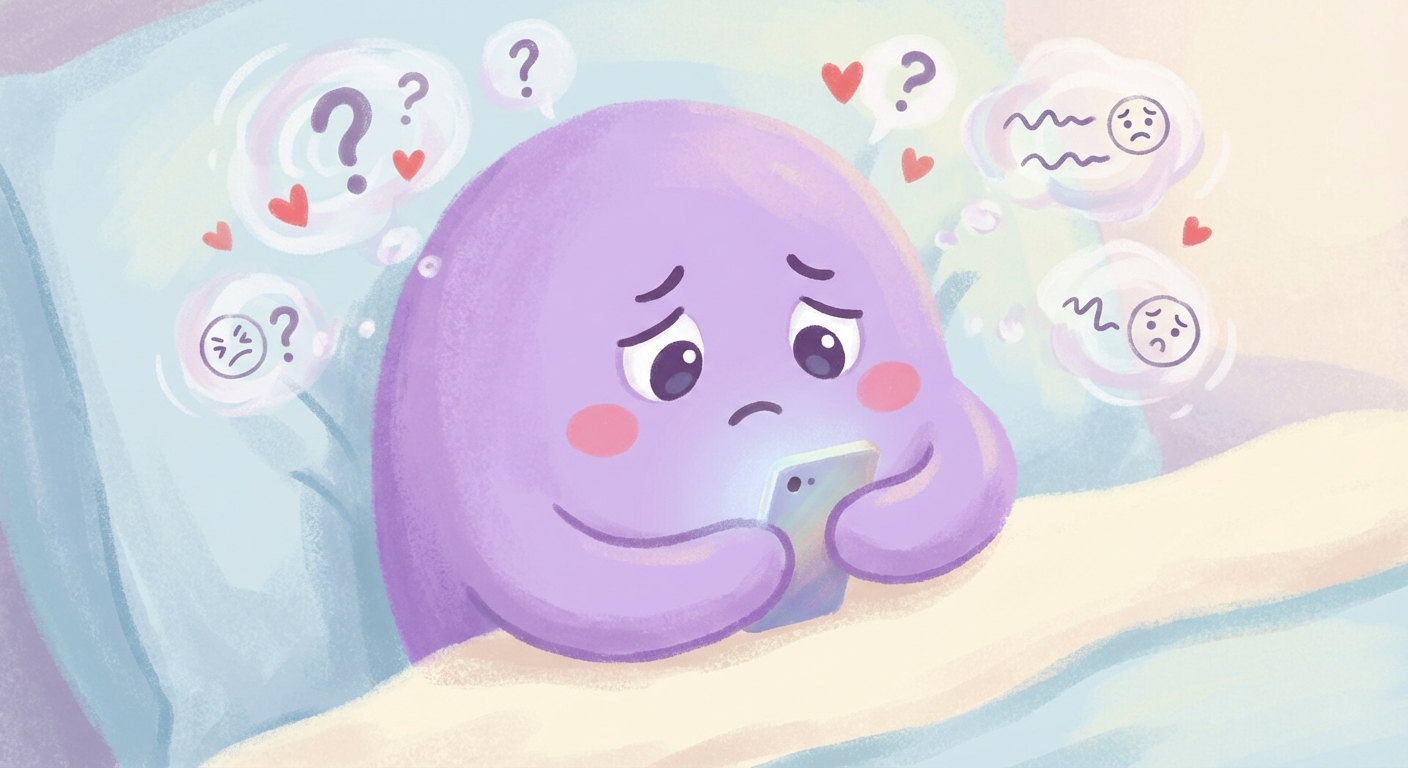
"Attachment anxiety in relationships refers to a pattern of fear around abandonment, need for constant reassurance, and difficulty trusting that partners will stay—rooted in early attachment experiences."
You meet someone wonderful. Things are good. Too good. So good that your brain starts whispering: 'When is this going to fall apart?'
You check your phone constantly. You analyze every text for hidden meaning. You need reassurance that they still care, then feel ashamed for needing reassurance. You're terrified they'll leave, which makes you act in ways that might push them away, which terrifies you more.
This is attachment anxiety—and it's not your fault. It's a pattern formed early in life when connection felt unpredictable or conditional. The good news? Attachment patterns can change. Security can be learned. You can have healthy relationships without the constant terror.
Understanding and Healing Attachment Anxiety
What Attachment Anxiety Actually Is
Attachment theory (developed by John Bowlby and Mary Ainsworth) describes how early relationships with caregivers shape our expectations about connection throughout life.
Secure attachment develops when caregivers are consistently responsive. You learn: 'People are reliable. I am worthy of love. Connection is safe.'
Anxious attachment develops when caregivers are inconsistently responsive—sometimes available, sometimes not, in unpredictable ways. You learn: 'People might leave. I need to work hard to keep them. Connection is dangerous but desperately needed.'
As an adult with anxious attachment, relationships trigger your nervous system's threat response. Closeness feels both essential and terrifying. You crave connection while fearing it will disappear. This isn't 'being dramatic'—it's your nervous system protecting you based on early learned patterns.
How Attachment Anxiety Shows Up
Anxious attachment manifests in specific, recognizable patterns:
Need for constant reassurance: You ask 'Do you still love me?' even though they just said so an hour ago. You analyze tone, texts, facial expressions for signs they're losing interest.
Fear of abandonment: Small conflicts feel like relationship-ending threats. If they don't text back quickly, you assume they're done with you. Distance feels like rejection.
Protest behaviors: When you sense distance (real or imagined), you escalate to get their attention—getting clingy, picking fights, threatening to leave first, creating drama to test if they'll stay.
Difficulty with autonomy: You feel threatened when your partner has separate interests, friends, or needs time alone. Their independence feels like rejection of you.
Hypervigilance to threat: You're constantly scanning for signs the relationship is in danger. Your nervous system is in chronic fight-or-flight mode, exhausting both you and your partner.
Self-blame cycles: When things go wrong, you assume it's because you're 'too much,' 'too needy,' or fundamentally unlovable—which increases anxiety, creating a vicious cycle.
Where Attachment Anxiety Comes From
Anxious attachment develops from specific early experiences:
Inconsistent caregiving: A parent who was sometimes warm and responsive, sometimes withdrawn or overwhelmed. You never knew which version you'd get, so you learned to be hypervigilant and work hard for connection.
Role reversal: Being expected to manage a parent's emotions or needs. You learned that your worth depends on taking care of others, creating anxiety when you can't control their feelings.
Conditional love: Affection that depended on performance, behavior, or mood. You learned that love isn't safe or stable—it must be earned and can be withdrawn.
Abandonment or loss: Death, divorce, hospitalization, or other separations that taught you 'people leave.' Even if intellectually you know your partner won't die, your nervous system remembers that people disappear.
Trauma: Abuse, neglect, or other adverse childhood experiences disrupt secure attachment formation, creating persistent fear around trust and safety in relationships.
Understanding origins isn't about blaming parents—it's about recognizing that your patterns made sense given what you experienced. They were adaptive then. They might not serve you now.
Anxious-Avoidant Relationship Dynamics
Here's a cruel pattern: anxiously attached people often pair with avoidantly attached partners. This creates a painful dance:
You move toward connection → they feel smothered and pull back → you panic and pursue harder → they withdraw further → you escalate protest behaviors → they shut down completely → you feel abandoned → the cycle repeats.
This isn't about incompatibility—it's about nervous system patterns. Your anxiety activates their avoidance. Their distance activates your anxiety. Both people are trying to feel safe, but the strategies conflict.
Breaking this cycle requires:
Self-soothing instead of demanding reassurance (learning to regulate your own nervous system), communicating needs clearly instead of testing through protest behaviors, respecting their autonomy while maintaining your own security, both partners working toward earned security through therapy or relationship work.
With conscious effort, anxious-avoidant pairs can become securely attached together. It requires awareness, regulation skills, and mutual commitment.
Healing Attachment Anxiety
Attachment patterns can change—this is called earned secure attachment. Here's how:
Therapy: Attachment-focused therapy (EMDR, somatic experiencing, psychodynamic) helps process early experiences and build new relational patterns. You're literally rewiring neural pathways.
Secure relationships: Being consistently met by a patient, responsive partner provides corrective emotional experiences. Over time, your nervous system learns that connection can be safe.
Nervous system regulation: Your attachment anxiety lives in your body, not just your thoughts. Somatic practices, breathing exercises, and grounding techniques help regulate the physiological panic that drives anxious behaviors.
Self-compassion: Notice when you're spiraling and meet yourself with kindness rather than shame. 'I'm feeling scared right now' instead of 'I'm so needy and broken.' Compassion de-escalates the nervous system.
Building self-security: Develop identity and worth outside relationships. Pursue interests, friendships, goals that remind you you're okay even alone. Security comes from within, not from constant partner proximity.
Questioning thoughts: When you think 'They're going to leave,' ask: Is there actual evidence? Or is this my attachment pattern talking? Cognitive work helps separate past from present.
Practical Strategies for Relationships
If you have anxious attachment and you're in a relationship:
Tell your partner what's happening: 'I have anxious attachment, which means I sometimes need extra reassurance. It's not about you—it's a pattern I'm working on.' Transparency reduces shame and helps them support you better.
Ask for what you need clearly: Instead of testing (pulling away to see if they pursue), say 'I'm feeling disconnected. Can we spend 20 minutes together tonight?' Direct requests work better than indirect bids.
Develop self-soothing rituals: When you want to text for the tenth time, try breathing exercises or grounding techniques first. Can you regulate yourself before seeking external reassurance?
Track your patterns: Notice what triggers attachment anxiety. Mood tracking can reveal that anxiety spikes when you're tired, stressed, or during certain times of your menstrual cycle—not because the relationship is actually threatened.
Practice distress tolerance: Sit with discomfort instead of immediately seeking reassurance. The anxiety will peak and then decrease on its own. You're building capacity to feel unsafe without acting on it.
Celebrate progress: Noticing your pattern is progress. Pausing before reacting is progress. Asking directly instead of testing is progress. Change is slow—acknowledge small wins.
Scientific Context
Attachment theory research by Bowlby, Ainsworth, and contemporary researchers shows that attachment patterns formed in childhood persist into adulthood but can change through therapy, secure relationships, and conscious practice. This is called earned secure attachment.
Related Reading
Regulation shouldn't be work.
Attachment anxiety lives in your nervous system—the racing heart, the tightness in your chest, the urge to check your phone again. Nomie helps you regulate these physical responses with breathing exercises, grounding techniques, and somatic tools.
When attachment panic hits, regulation tools help you calm down before reacting. Over time, you build capacity to feel the fear without letting it control your behavior.
Frequently Asked Questions
Can anxious attachment be healed?
Yes—this is called earned secure attachment. Through therapy, secure relationships, and nervous system regulation work, you can develop new attachment patterns. It's not erasing the past but building new neural pathways that allow for secure connection. Change takes time and conscious practice, but it's absolutely possible.
Why do I pick partners who pull away?
Anxiously attached people often unconsciously choose avoidantly attached partners because the dynamic feels familiar—the push-pull replicates early inconsistent caregiving. Additionally, secure partners might feel 'boring' because your nervous system is wired to equate anxiety with passion. Healing means learning that safe can also be exciting.
Is anxious attachment the same as codependency?
They overlap but aren't identical. Anxious attachment is about fear of abandonment and need for reassurance. Codependency is about defining your worth through caretaking and losing yourself in relationships. Many anxiously attached people are codependent, but not all. Both benefit from boundaries and self-development work.
Should I tell my partner I have anxious attachment?
Usually yes—transparency helps. Explaining that certain behaviors (needing reassurance, fear of abandonment) come from attachment patterns rather than distrust of them specifically reduces conflict. It also helps them understand how to support you better. Frame it as something you're working on, not an excuse for harmful behavior.
Can two anxiously attached people have a healthy relationship?
Yes, but it requires conscious effort. Two anxious people can trigger each other's fears, but they also often understand each other deeply. Success depends on both people actively working toward earned security—developing self-soothing, regulation skills, and secure communication patterns together.
Continue Reading
View All PostsNomie vs Finch: Somatic AI Wellness or Virtual Pet Gamification?
Finch gamifies self-care with a virtual pet bird. Nomie calms your nervous system with somatic tools. Here's which approach actually fits your needs.
Anxiety Dizziness and Lightheadedness: Why It Happens and What Helps
Feeling dizzy during anxiety can be terrifying—but it’s usually a nervous-system + breathing effect, not a sign you’re about to faint. Learn common causes and how to steady yourself.
Anxiety Tingling and Numbness: Causes, Meaning, and How to Stop It
Pins and needles during anxiety can feel alarming—especially in hands, face, or lips. Learn why it happens (often breathing + adrenaline) and how to calm it down safely.