Overthinking Relationships: Breaking the Anxious Attachment Loop
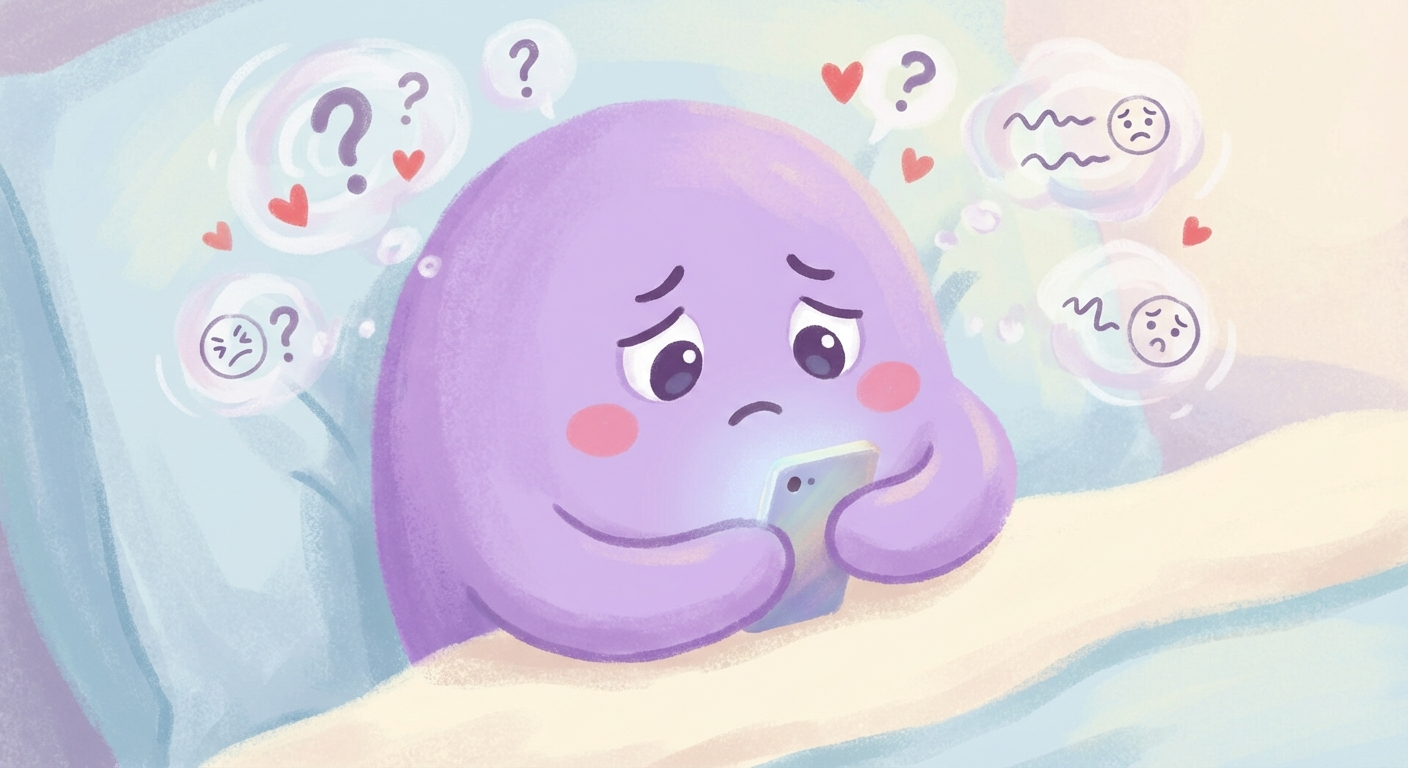
"Overthinking relationships refers to the compulsive mental analysis of romantic or close relationships, often driven by anxious attachment patterns. It involves ruminating on partner behavior, seeking hidden meanings, and catastrophizing relationship outcomes."
They didn't text back for three hours. Your brain immediately launches an investigation: Did you say something wrong? Are they pulling away? Is this the beginning of the end? By the time they respond (they were just busy), you've mentally rehearsed the breakup conversation.
If this pattern feels familiar, you're not alone. Relationship overthinking is exhausting, but it's not random—it's often driven by anxious attachment patterns that developed long before your current relationship. Understanding why your brain does this is the first step toward peace.
This isn't about "just relaxing" or "being less crazy." It's about recognizing a pattern and learning to work with your nervous system instead of against it.
Understanding and Managing Relationship Anxiety
The Anxious Attachment Loop
Attachment styles form early, based on how reliably caregivers responded to your needs. Anxious attachment develops when that response was inconsistent—sometimes present, sometimes absent—leaving you hypervigilant to signs of abandonment.
This hypervigilance persists into adult relationships. You're constantly scanning for threat: Does that silence mean they're mad? Did that comment mean they don't love me? Your nervous system is on high alert, and it finds threats everywhere—including in completely neutral behavior.
The loop: Perceived threat → anxiety → seek reassurance → temporary relief → new perceived threat → repeat. Without intervention, this cycle can exhaust both you and your partner.
Rumination vs. Processing
There's a crucial difference between processing feelings and ruminating. Processing leads somewhere. Rumination circles endlessly.
Processing: You notice a feeling (anxiety about your partner's distance), explore it (why does distance trigger me?), gain insight (it connects to past experiences of abandonment), and arrive at some resolution or action.
Rumination: You notice the feeling and then analyze the situation from every angle, seeking certainty that can never be found. Did they mean X or Y? What about Z? You're searching for a guarantee that doesn't exist, and the searching intensifies the anxiety.
Ask yourself: Am I learning something new, or am I repeating the same worried thoughts? If you've been over the same ground multiple times with no new insight, you're ruminating.
The False Promise of Certainty
Much relationship overthinking is an attempt to achieve certainty: If I analyze enough, I'll know for sure whether they love me. Whether they'll leave. Whether I can trust them.
This certainty is impossible. Relationships involve another person whose internal experience you can never fully know. They involve the future, which is inherently uncertain. No amount of analysis can eliminate the vulnerability inherent in love.
The goal isn't to become certain your relationship is safe. It's to become comfortable with uncertainty—to tolerate not knowing everything while choosing connection anyway. This is harder than finding certainty, but it's actually achievable.
Interrupting the Overthinking Loop
When you notice rumination starting, intervention is possible. The key is catching it early, before the loop gains momentum.
Label the behavior: "I'm overthinking again." This creates distance between you and the thought spiral. You become someone observing the overthinking rather than someone drowning in it.
Ground yourself: The overthinking exists in your head; your body exists in the present. Use grounding techniques—physical sensation, the 3-3-3 rule, movement—to shift from thinking to sensing.
Set a worry time: Rather than trying to never worry (impossible), give yourself 15 minutes to worry intentionally. Outside that time, when worries arise, note them for later. This contains the rumination without suppressing it.
Communication That Doesn't Push Partners Away
Anxious attachment often drives reassurance-seeking that becomes exhausting for partners: constant texts, need for affirmation, asking "Are you mad at me?" repeatedly. Partners may pull back, confirming your fears and intensifying the cycle.
Pause before seeking reassurance: Ask yourself what you actually need. Often it's not information (they've told you they love you) but soothing. Can you soothe yourself, or do you need co-regulation?
State feelings, not accusations: "I'm feeling anxious and could use connection" lands differently than "You never text me back." Own your experience without making your partner responsible for causing it.
Be specific about needs: "I'd feel more connected if we had a quick check-in call each evening" is actionable. "I need you to be more attentive" is vague and sets partners up to fail.
Building Secure Attachment Over Time
Attachment styles aren't fixed. With awareness and practice, anxious attachment can shift toward earned security. This takes time and often benefits from therapy, but progress is possible.
Notice pattern interruptions: When you expected abandonment and it didn't happen, really register that. Actively collect evidence that contradicts your anxious predictions.
Self-soothing practice: Build your capacity to regulate without your partner. This isn't about needing them less—it's about being able to hold yourself during the gap between need and response.
Choose secure partners: If you're not yet in a relationship, be aware that anxiously attached people often feel most "chemistry" with avoidantly attached partners—a recipe for the exact dynamic that reinforces anxiety. A secure partner might feel boring at first but creates the conditions for healing.
Scientific Context
Attachment theory, originally developed by John Bowlby and later expanded by Mary Ainsworth and others, provides the framework for understanding relationship anxiety. Research consistently links anxious attachment to relationship rumination and reassurance-seeking.
Related Reading
Regulation shouldn't be work.
Relationship anxiety often spikes when your nervous system is already dysregulated. Nomie helps you notice the connection between your physical state and your relationship worries—tracking when overthinking intensifies and what helps you return to calm.
By building regulation capacity, you can soothe yourself during anxious moments instead of immediately seeking reassurance from your partner.
Frequently Asked Questions
Is relationship anxiety the same as not loving someone?
No. Anxiety about a relationship can coexist with deep love. In fact, anxiously attached people often love intensely—the anxiety comes from fear of losing that love, not from absence of feeling. The question isn't whether you love them but whether you can tolerate the uncertainty inherent in love.
How do I know if my anxiety is intuition?
Intuition tends to be clear and calm—a quiet knowing that doesn't require constant analysis. Anxiety is loud and repetitive, cycling through the same worries without resolution. If you've analyzed something from every angle multiple times without new insight, it's likely anxiety, not intuition.
Should I tell my partner about my anxious attachment?
Usually yes. Sharing this information helps partners understand your reactions and not take them personally. It also allows you to work together on the pattern. The key is taking responsibility—"I have this pattern and I'm working on it" rather than "You need to accommodate my anxiety."
Can a relationship survive anxious attachment?
Absolutely. Many people with anxious attachment build healthy, lasting relationships—especially with partners who are securely attached and with commitment to personal growth. The pattern becomes problematic when it goes unexamined, not when it exists.
Continue Reading
View All PostsNomie vs Finch: Somatic AI Wellness or Virtual Pet Gamification?
Finch gamifies self-care with a virtual pet bird. Nomie calms your nervous system with somatic tools. Here's which approach actually fits your needs.
Anxiety Dizziness and Lightheadedness: Why It Happens and What Helps
Feeling dizzy during anxiety can be terrifying—but it’s usually a nervous-system + breathing effect, not a sign you’re about to faint. Learn common causes and how to steady yourself.
Anxiety Tingling and Numbness: Causes, Meaning, and How to Stop It
Pins and needles during anxiety can feel alarming—especially in hands, face, or lips. Learn why it happens (often breathing + adrenaline) and how to calm it down safely.