Why Is My Anxiety Worse at Night? The Science Behind Nighttime Worry
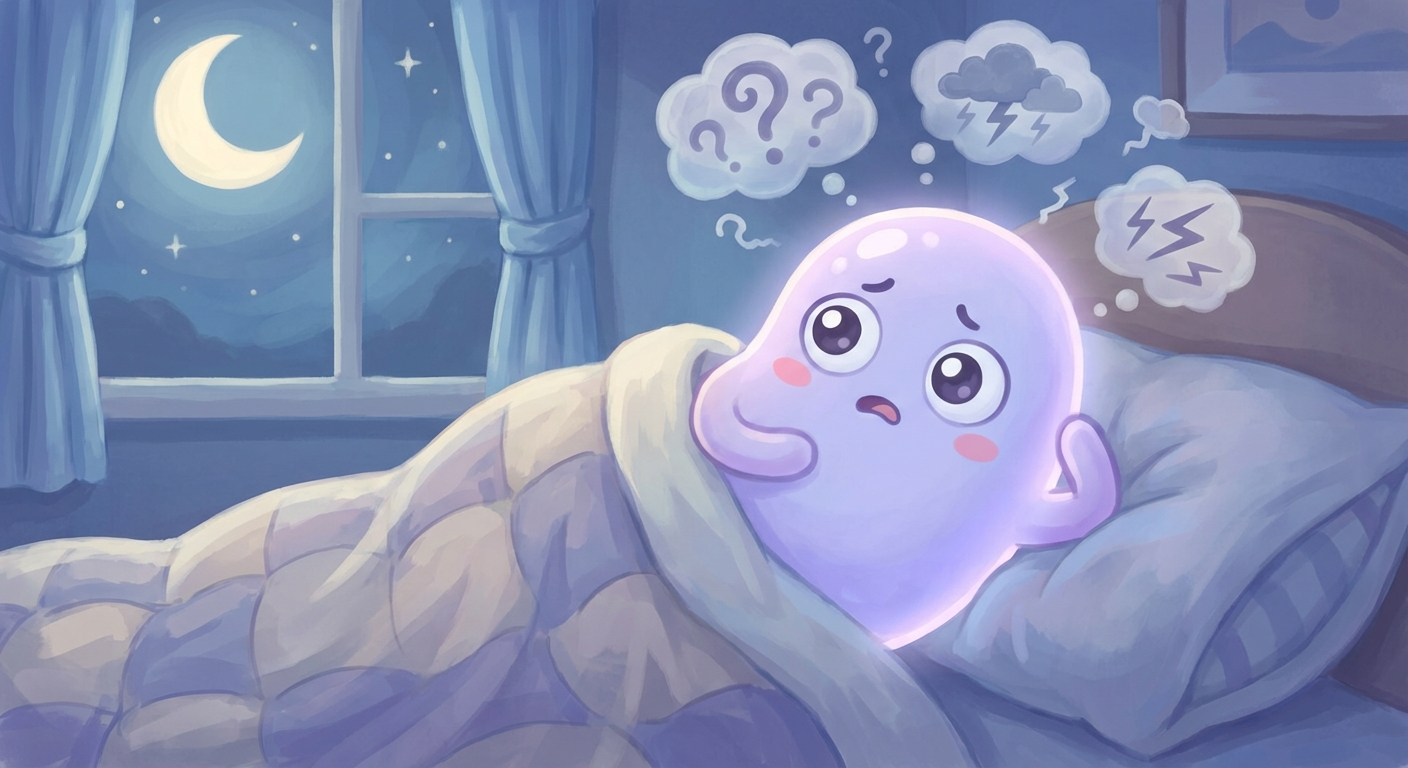
"Nighttime anxiety refers to increased worry and anxious symptoms that occur in the evening or at bedtime. It's caused by reduced cortisol, fewer distractions, circadian influences on the prefrontal cortex, and accumulated stress from the day."
3 AM. Wide awake. Heart racing about something that seemed manageable twelve hours ago.
If your anxiety reliably worsens after dark, you're not imagining it—and you're not alone. Nighttime anxiety is neurologically predictable, not a personal failing or sign that your problems are actually that serious.
Several biological and psychological factors converge to make nighttime a perfect storm for worry. Understanding why this happens doesn't make anxiety disappear, but it does normalize the experience and point toward evidence-based solutions.
Your 3 AM brain is not giving you accurate information about reality. Here's why, and what to do about it.
The Neuroscience of Nighttime Worry
Cortisol and the Daily Rhythm
Cortisol—your stress hormone—follows a daily cycle. It peaks in early morning (helping you wake up) and drops through the day, reaching its lowest levels at night.
Counterintuitively, low cortisol can feel like anxiety. Cortisol helps you cope with stress. When it's depleted, you have fewer biochemical resources for resilience. The same worries that felt manageable at noon become overwhelming at midnight.
This is why people often feel worst about their problems late at night and better (though perhaps not good) in the morning. Your biochemistry literally changes your threat perception.
The Prefrontal Cortex Goes Offline
Your prefrontal cortex—the rational, planning, perspective-taking part of your brain—reduces activity as you prepare for sleep. This is normal and necessary for rest.
But the amygdala—your emotional alarm center—doesn't dim on the same schedule. As your rational brain quiets, your emotional brain's signal becomes proportionally louder. Worries that your prefrontal cortex could contextualize during the day run unchecked at night.
This is why nighttime worries often feel simultaneously urgent and impossible to reason through. You've lost the brain regions that do the reasoning.
No Distractions, No Escape
During the day, work, conversation, activity, and media provide constant distraction from internal states. At night, these buffers disappear.
Silence amplifies the signal. Lying still in a dark, quiet room leaves nothing to compete with your thoughts. Worries that were background noise become the only channel playing.
This isn't personal weakness—it's signal-to-noise ratio. When external noise drops, internal noise seems louder by comparison. Your actual anxiety level might be the same; it's just now the only thing you can perceive.
Accumulated Stress Expression
Throughout the day, you encounter stressors but rarely process them fully. There's always the next thing. Stress accumulates without discharge.
At night, when you finally stop, that accumulated stress seeks expression. It's like a pressure valve releasing. The anxiety you're feeling at night isn't about tonight—it's the backlog from the entire day (or week, or longer).
This is why people often can't identify what specifically they're anxious about at night. The anxiety is systemic, not situational. It's the nervous system processing accumulated activation, not the mind solving specific problems.
Evidence-Based Solutions
Understanding the mechanisms points toward effective interventions:
Worry time earlier in the day: Schedule 15-20 minutes in late afternoon to process concerns. Write them down, consider solutions, then close the notebook. This preempts the nighttime backlog.
Somatic regulation before bed: Your rational brain is going offline anyway. Skip trying to think your way calm. Use breathing exercises, body scans, or grounding techniques that work at the nervous system level.
Temperature regulation: A cool room signals sleep to your body. Consider a cool shower before bed to activate the temperature drop that triggers drowsiness.
Stop overthinking spirals: When caught in loops, name them ("this is 3 AM thinking"), remind yourself this is neurological timing rather than accurate threat assessment, and redirect to body-based regulation.
Consistent sleep schedule: Regular sleep times strengthen circadian rhythms, including the natural cortisol cycle. Erratic timing disrupts the system that's already working against you.
Scientific Context
Research on circadian rhythms shows cortisol patterns and prefrontal cortex activity vary predictably throughout the day, affecting emotional regulation capacity. Sleep science confirms reduced cognitive control in evening hours.
Related Reading
Regulation shouldn't be work.
Your rational brain is offline at night. Body-based regulation works when thinking doesn't. Nomie's haptic feedback, breathing exercises, and digital fidgets are designed for exactly these moments—calming your nervous system when your prefrontal cortex has clocked out.
The next time 3 AM worry hits, skip trying to reason with it. Use tools that work at the body level instead.
Frequently Asked Questions
Why do small problems feel huge at night?
Your prefrontal cortex—responsible for perspective and proportional thinking—reduces activity in the evening. Meanwhile, your amygdala (emotional processing) remains active. You've lost the brain region that contextualizes threats. The same problem that seems manageable by day loses its proportionality at night.
Should I try to solve problems when anxious at night?
Generally no. Your problem-solving capacity is neurologically diminished at night. Attempts to "figure things out" often create more anxiety rather than resolution. Note the concern for tomorrow, then shift to body-based calming. Your morning brain will have better answers.
Is nighttime anxiety a sign of a serious problem?
Not necessarily. Nighttime anxiety is extremely common and has clear neurological causes. However, if it's severely disrupting your sleep regularly, or accompanied by other significant symptoms, consulting a professional makes sense. The timing of your anxiety doesn't indicate its seriousness.
Will my nighttime anxiety ever go away?
For many people, it significantly improves with consistent sleep hygiene, stress management, and body-based regulation practices. The tendency toward evening worry may remain, but its intensity and duration can reduce substantially. Building skills and habits shifts the experience over time.
Continue Reading
View All PostsNomie vs Finch: Somatic AI Wellness or Virtual Pet Gamification?
Finch gamifies self-care with a virtual pet bird. Nomie calms your nervous system with somatic tools. Here's which approach actually fits your needs.
Anxiety Dizziness and Lightheadedness: Why It Happens and What Helps
Feeling dizzy during anxiety can be terrifying—but it’s usually a nervous-system + breathing effect, not a sign you’re about to faint. Learn common causes and how to steady yourself.
Anxiety Tingling and Numbness: Causes, Meaning, and How to Stop It
Pins and needles during anxiety can feel alarming—especially in hands, face, or lips. Learn why it happens (often breathing + adrenaline) and how to calm it down safely.